Konstantin Chaykin · Joker
The model in detail
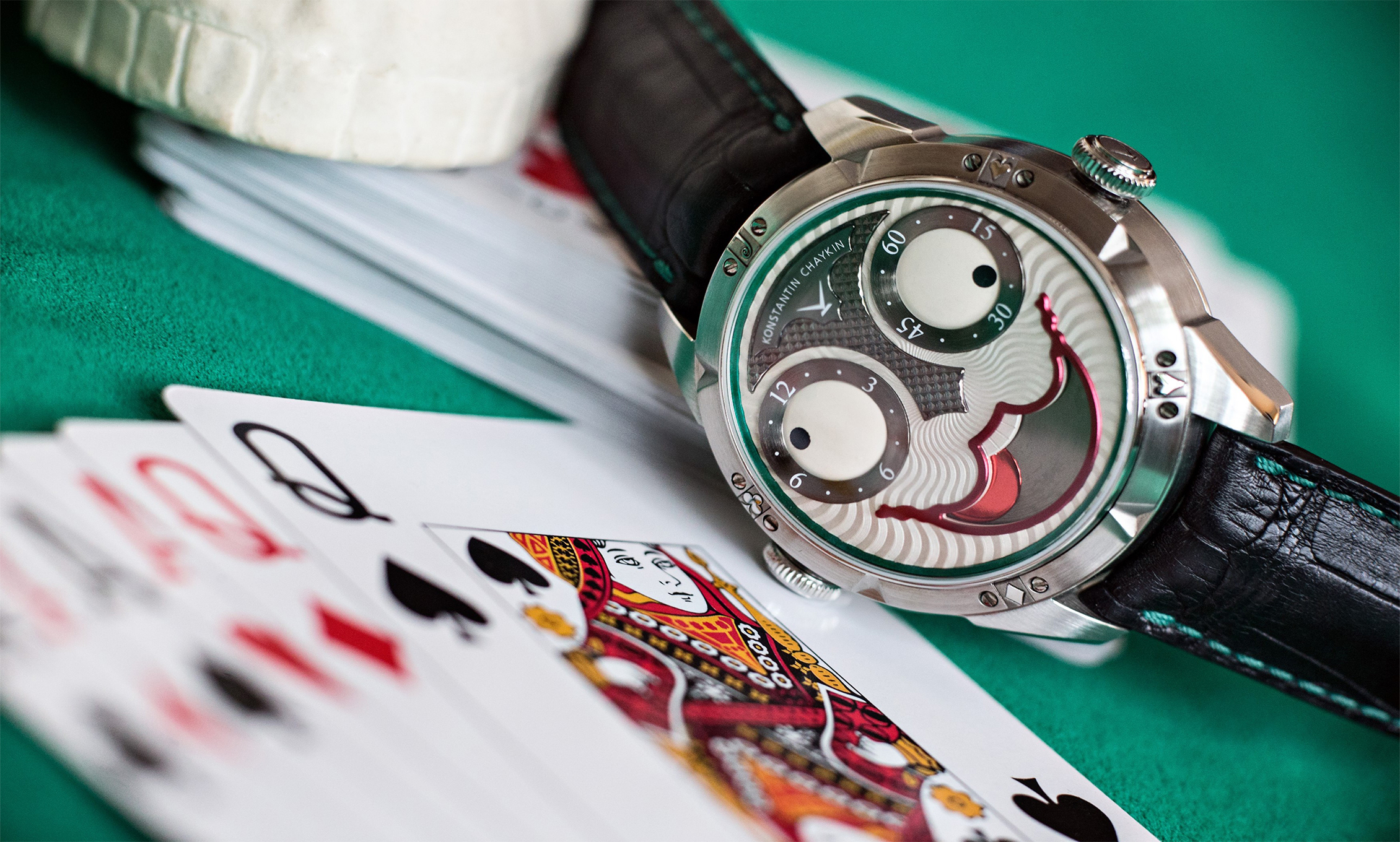
Try covering the bottom half of the dial to read the time. The left eye has a familiar scale: 12, 3, 6 and 9. Follow the line from the centre of the white disc to the black pupil to read the hour. Read the right eye the same way for the minutes, this time on a scale of 60. The discs turn at different speeds. That is what gives the face expression: the minute pupil travels all the way around its scale while the hour pupil moves just one of its twelve divisions.
 Enlarge
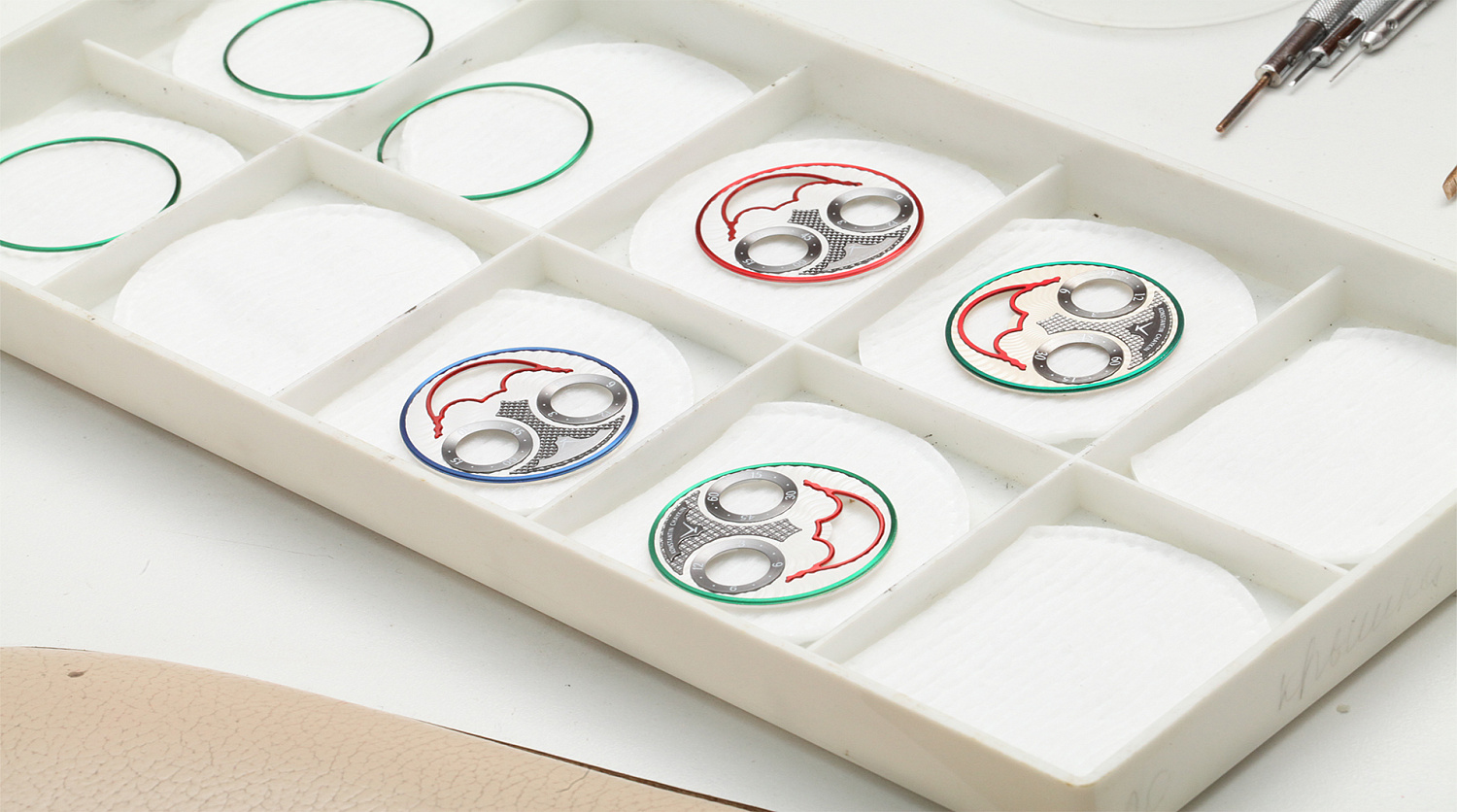
The hour scale on the left and minute scale on the right frame white discs with black pupils. Dials at different stages of assembly sit on the watchmaker’s bench.
© Konstantin Chaykin · SourceNow uncover the lower half. The red tongue in the mouth aperture is linked to the moon phase, so the expression can look different at the same time on different days. A 59-tooth wheel sets this slower rhythm. There is a clue to the function on the flank of the case: the left-hand “crown” is fixed, and a recessed moon-phase corrector sits inside it.
 Enlarge
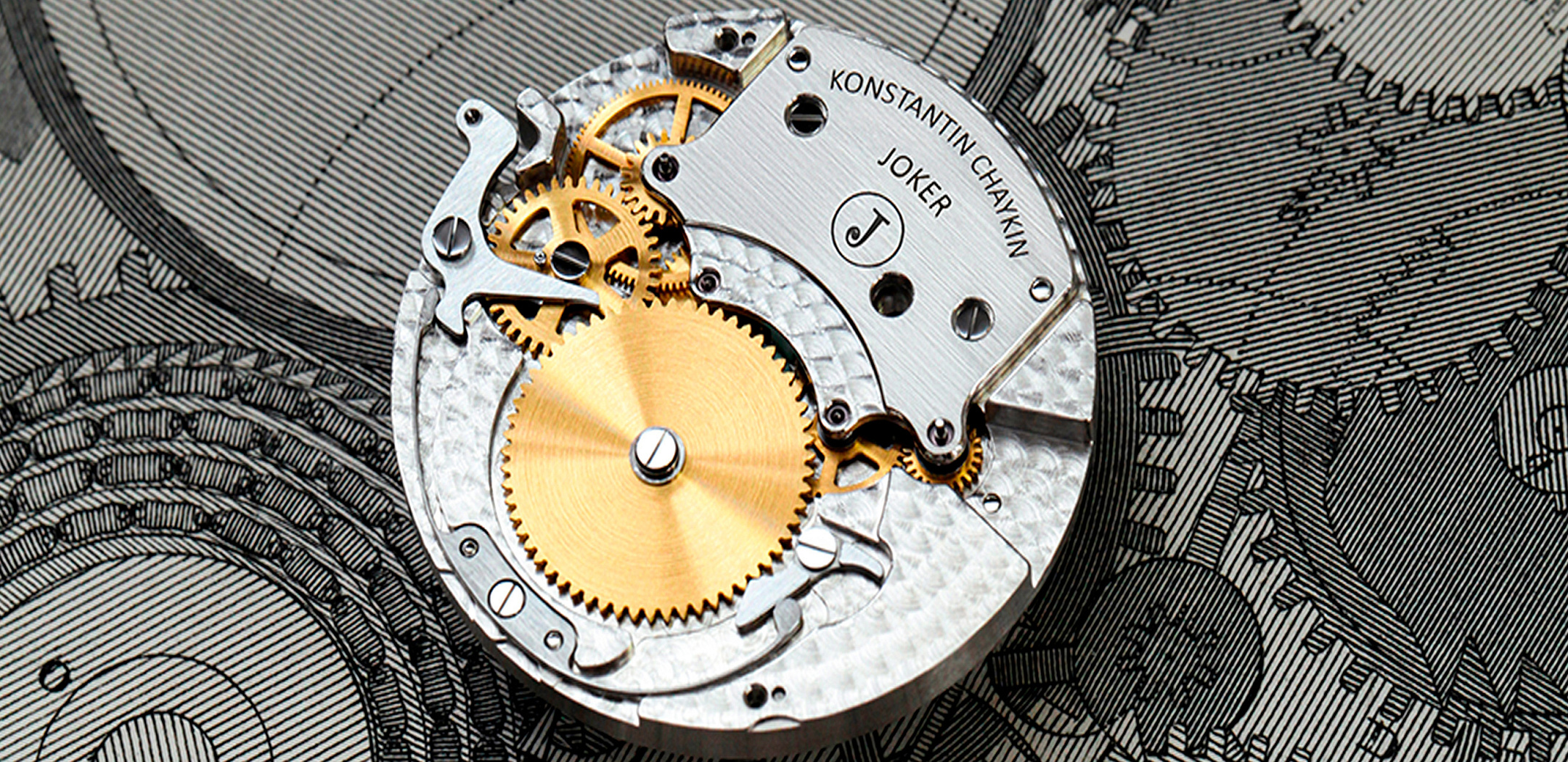
The uncased display module reveals wheels usually hidden under the dial.
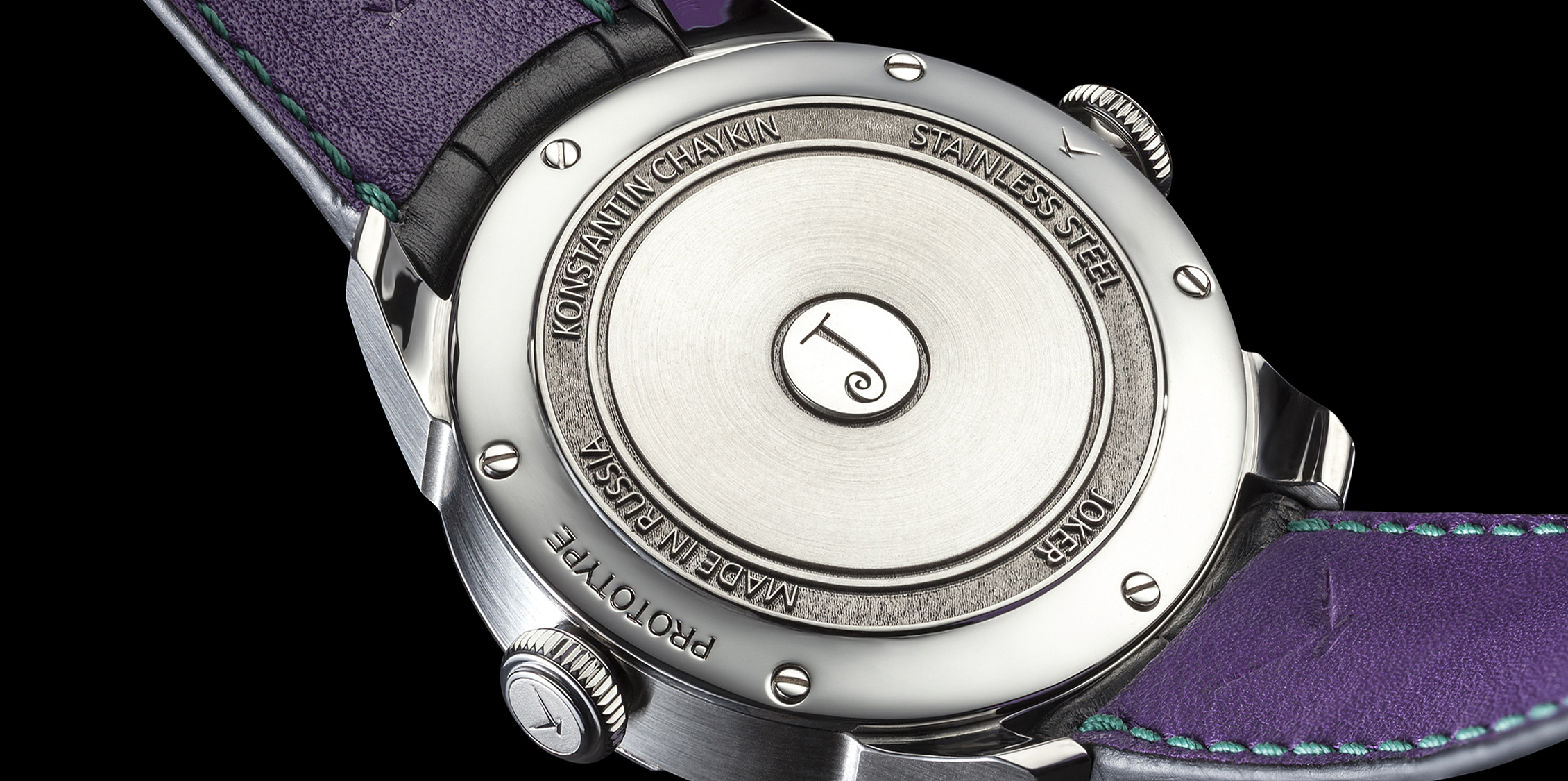
© Konstantin Chaykin · SourceA 61-part module designed by Chaykin for the automatic ETA 2824-2 drives the three indications. Together they form calibre K.07-0, running at 4 Hz with a 38-hour power reserve. The photograph of the uncased module reveals a large toothed component. Once the watch is assembled, a solid steel back closes off this view. It bears an engraved J and the individual edition number.
 Enlarge
The solid back of the steel edition is engraved with a J and the individual edition number.
© Konstantin Chaykin · SourceThe 2017 GPHG entry gives the reference as K.07-0 Joker and the price as 7,500 Swiss francs before VAT. That is a historical figure, not a current offer. For a look at the watchmaker positioning parts on the plate with tweezers, open the manufacture’s 54-second assembly film in the sources.