
01
My trip to Geneva
During a trip to Geneva, I visited the Patek Philippe Museum. For CREATIVE TIME, I want to preserve this part of the journey in photographs: antique pocket watches, complicated wristwatch mechanisms, jewellery pendants, tools and watchmakers’ benches. It is a good reason to look at watchmaking beyond familiar conversations about references and prices. This account brings together my photographs and explanations; historical and technical information is supplemented by the manufacture’s own materials.
02
A museum born from a collection
The museum opened in November 2001 and grew from Philippe Stern’s interest in collecting. Its Plainpalais building was previously connected with watch production: Ateliers Réunis made cases and bracelets here. The place itself therefore continues the history of the craft. Today the displays span around five centuries, setting Patek Philippe’s own history alongside much earlier European watchmaking. That is worth remembering when looking at antique showcases: not every exhibit bears the Patek name.
03
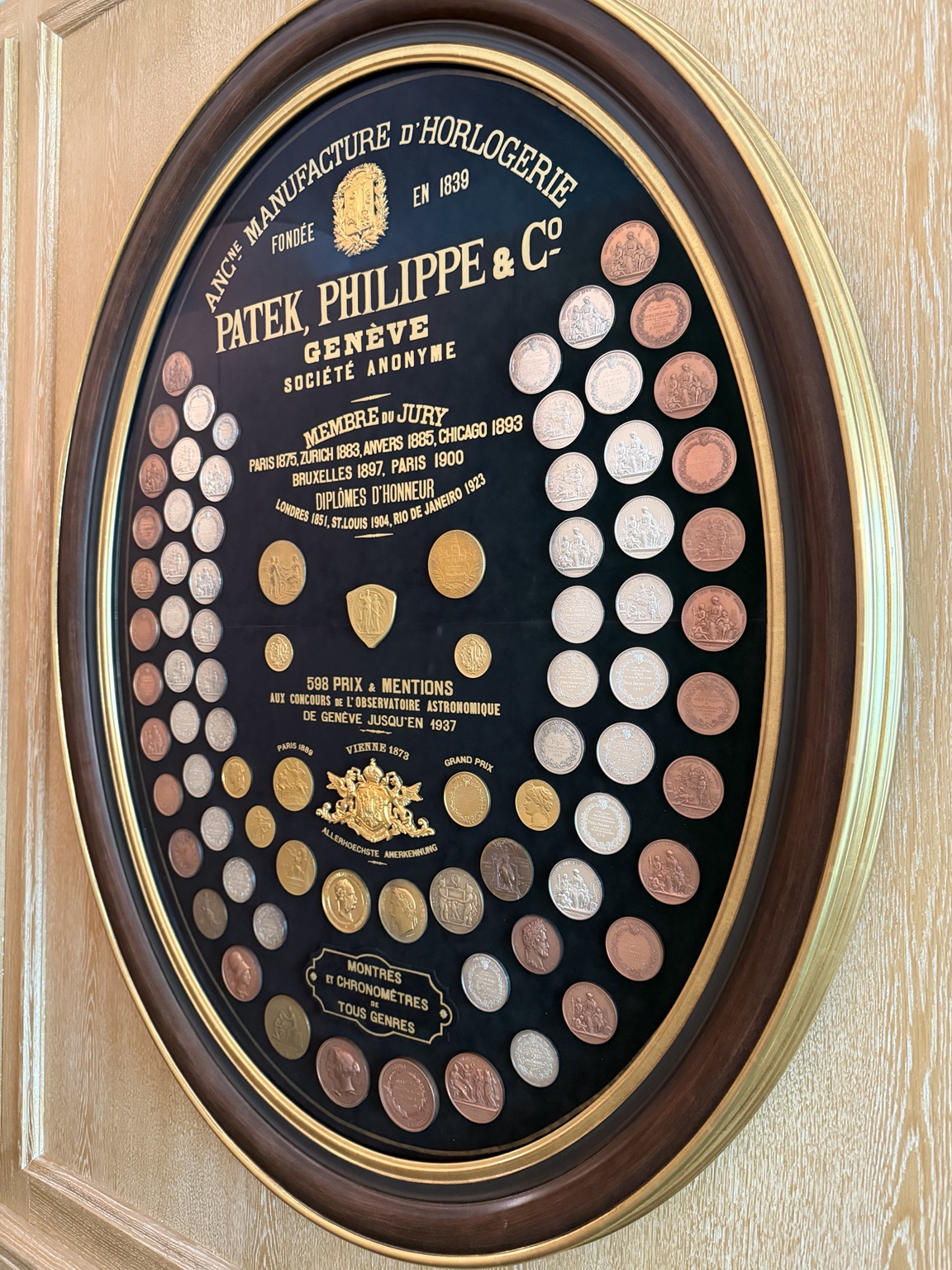
History on a panel of medals
One of my photographs shows an oval panel of medals bearing the name Patek, Philippe & Cie. Paris, Zurich and Chicago can be read among the cities mentioned. Objects like this show how a manufacture presented its achievements: awards, exhibitions and precision competitions became part of its reputation. I find it useful to view the photograph as a document of its era. Behind the brand’s present fame is a long history of watchmakers demonstrating what their mechanisms could achieve through concrete results.
04
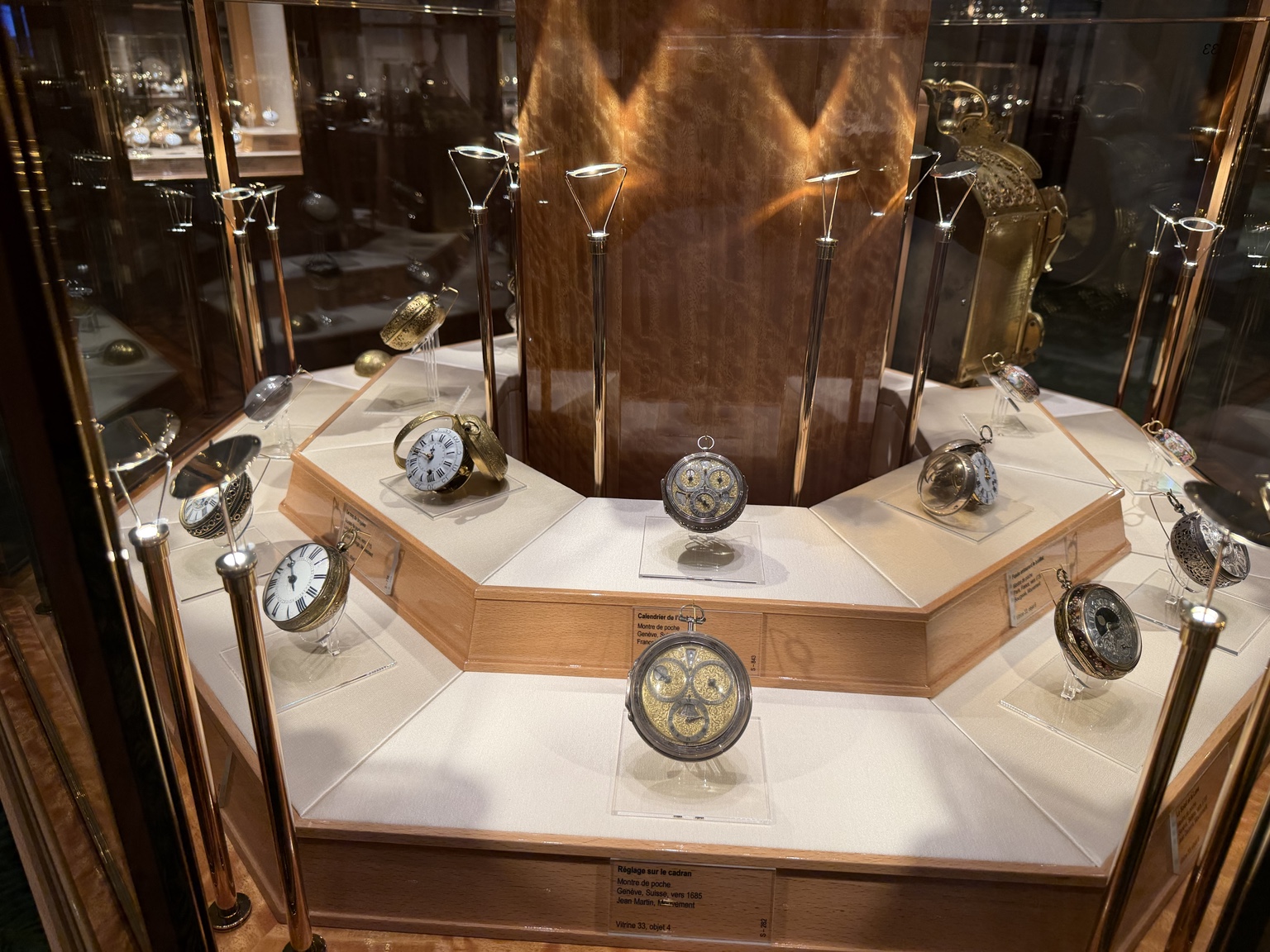
Pocket watches: form and mechanism
The antique pocket-watch showcase reveals how varied the form of portable time could be. A round dial is only part of the object: a cover might carry engraving, a case elaborate decoration, and displays could be arranged differently from watch to watch. Several small dials and rich finishing appear in the foreground of my picture. I do not assign an exact function to every indication from a general photograph; the first interest is the approach itself, with mechanism and ornament created as a whole.
05
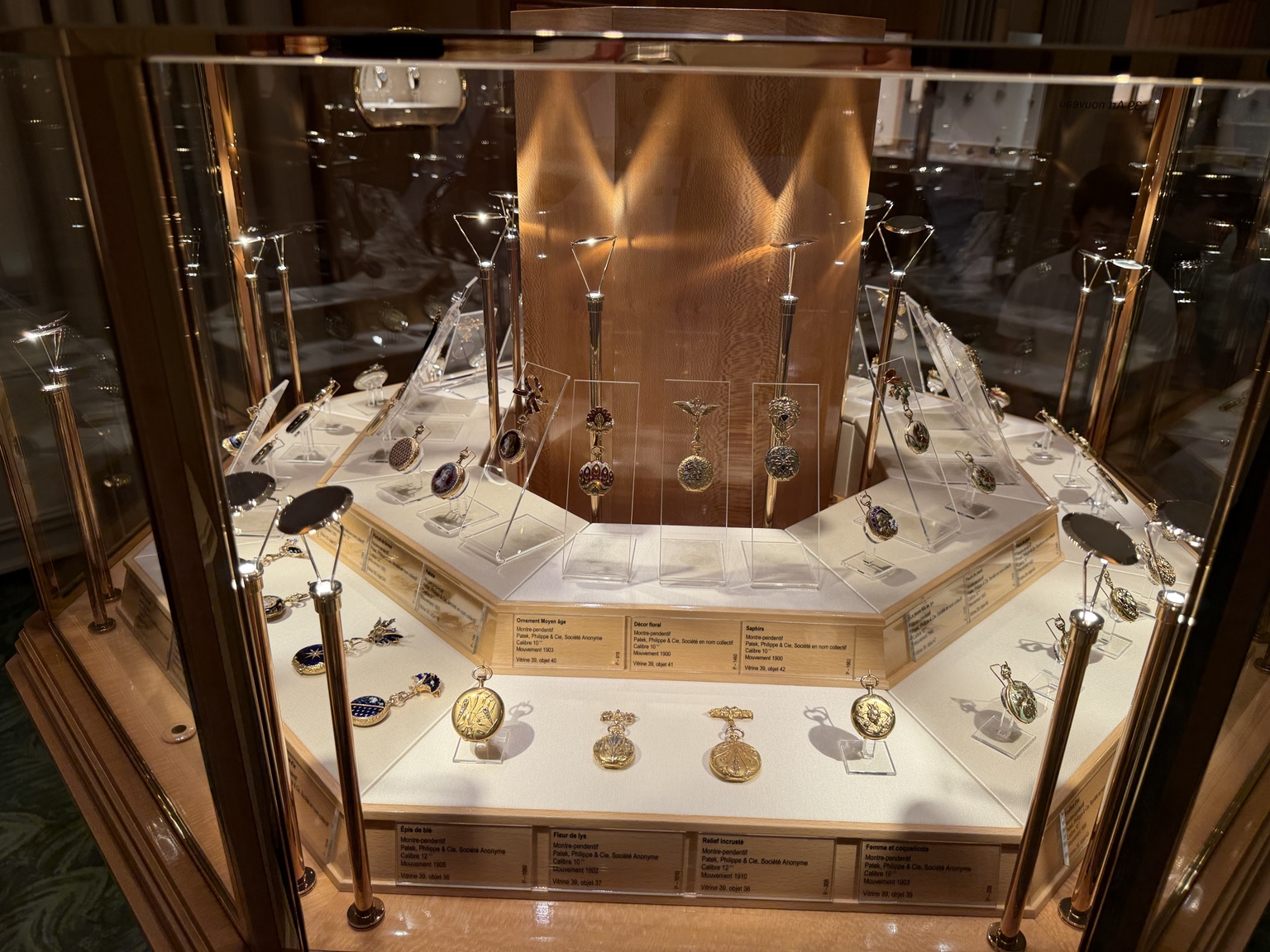
The watch as a jewel
Pendant watches tell a separate story. The photograph shows small cases, decorative attachments, coloured surfaces and floral motifs. In this format, a watch became part of clothing and a jewellery ensemble. It asks to be judged in two ways at once: the finesse of its mechanical solution and the expressiveness of the object. A short video from the trip preserves another showcase of coloured miniatures, helping convey the exhibits’ actual proportions and how they sit alongside one another.
A short moment from the trip
A showcase of coloured miniatures. Original video from my photo archive, 6 seconds.
06
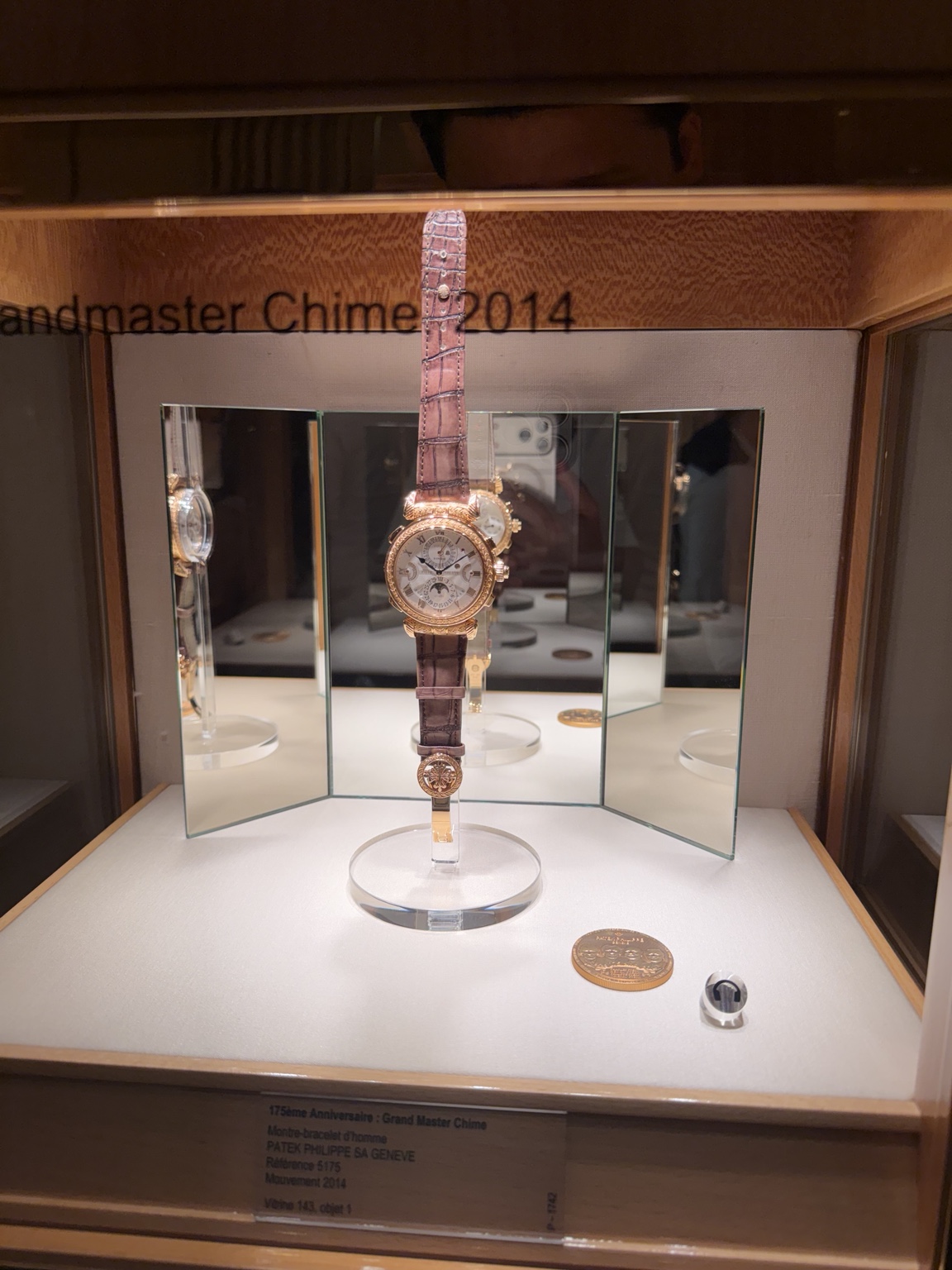
Grandmaster Chime 5175
One of the most informative photographs is Grandmaster Chime, with a museum label reading “175ème Anniversaire”, reference 5175 and the date 2014. The model was created for Patek Philippe’s 175th anniversary. It has 20 complications, and its movement contains 1,366 components. The double-sided case lets the wearer choose which dial faces up. It rewards attention to engineering: complexity involves coordinating functions, protecting them against incorrect operation and fitting them into a wearable object, as well as their number.
07
When time has a sound
Grandmaster Chime returns us to the question of how mechanical watches can sound. A minute repeater reports the time on demand; grande and petite sonnerie provide automatic striking in their respective patterns. The 5175 also has an unusual date repeater. My museum photograph shows the exhibit, while the sound functions are described from Patek Philippe’s official materials; this publication is not my recording of its sound. For me, this is an important part of understanding watches: time can take an acoustic form as well as a visual one.
08
The world on a dial
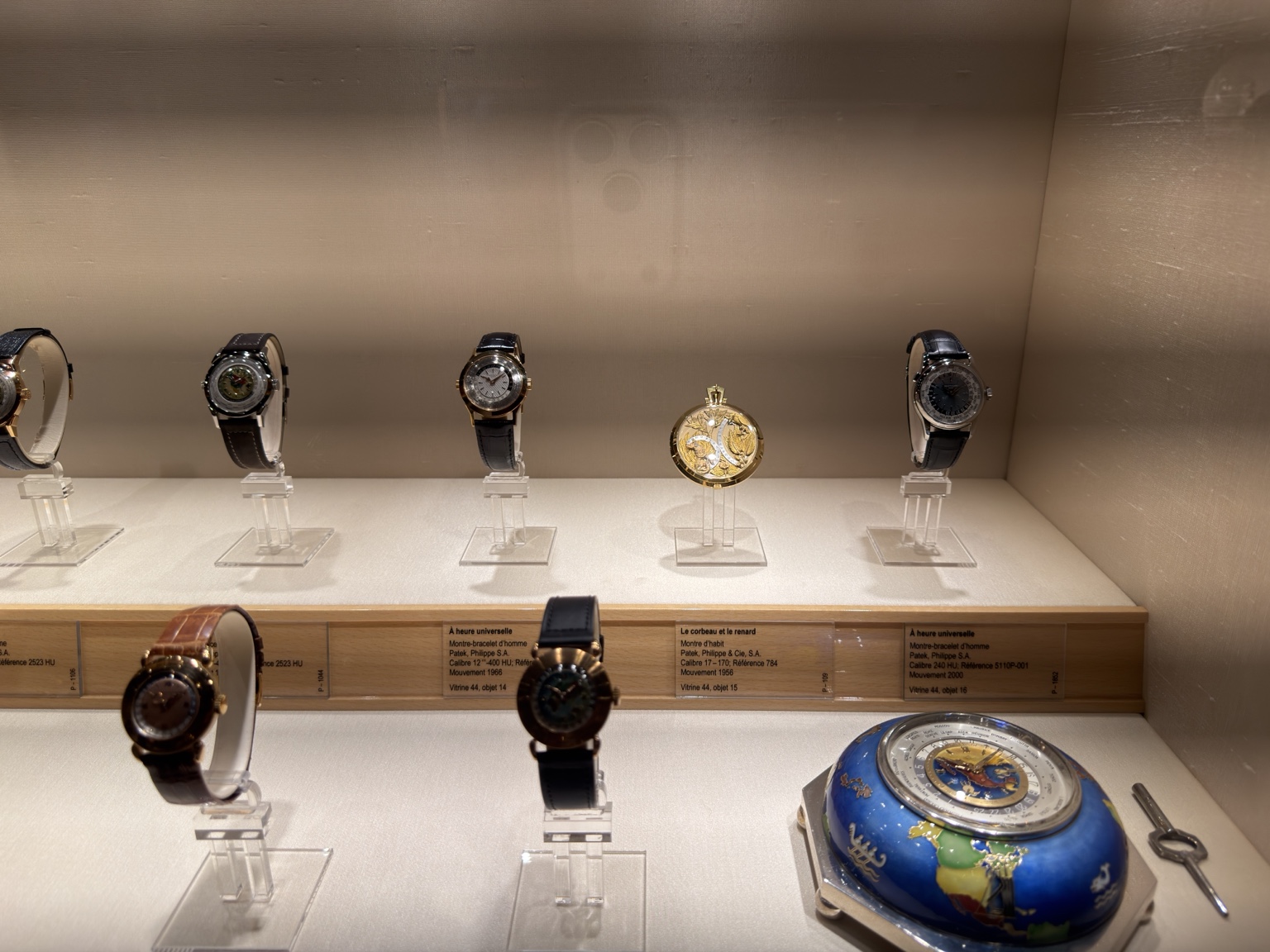
The world-time showcase reveals another line of development: displaying several geographical places on one dial. City rings and 24-hour scales turn a small mechanism into a map of relationships between time zones. My picture places wristwatches beside pocket watches, with labels including “À heure universelle”. The subject is familiar to a modern reader: travel, international work, a call home. The historical showcase shows how long watchmakers have been addressing that need.
09
Mechanics up close
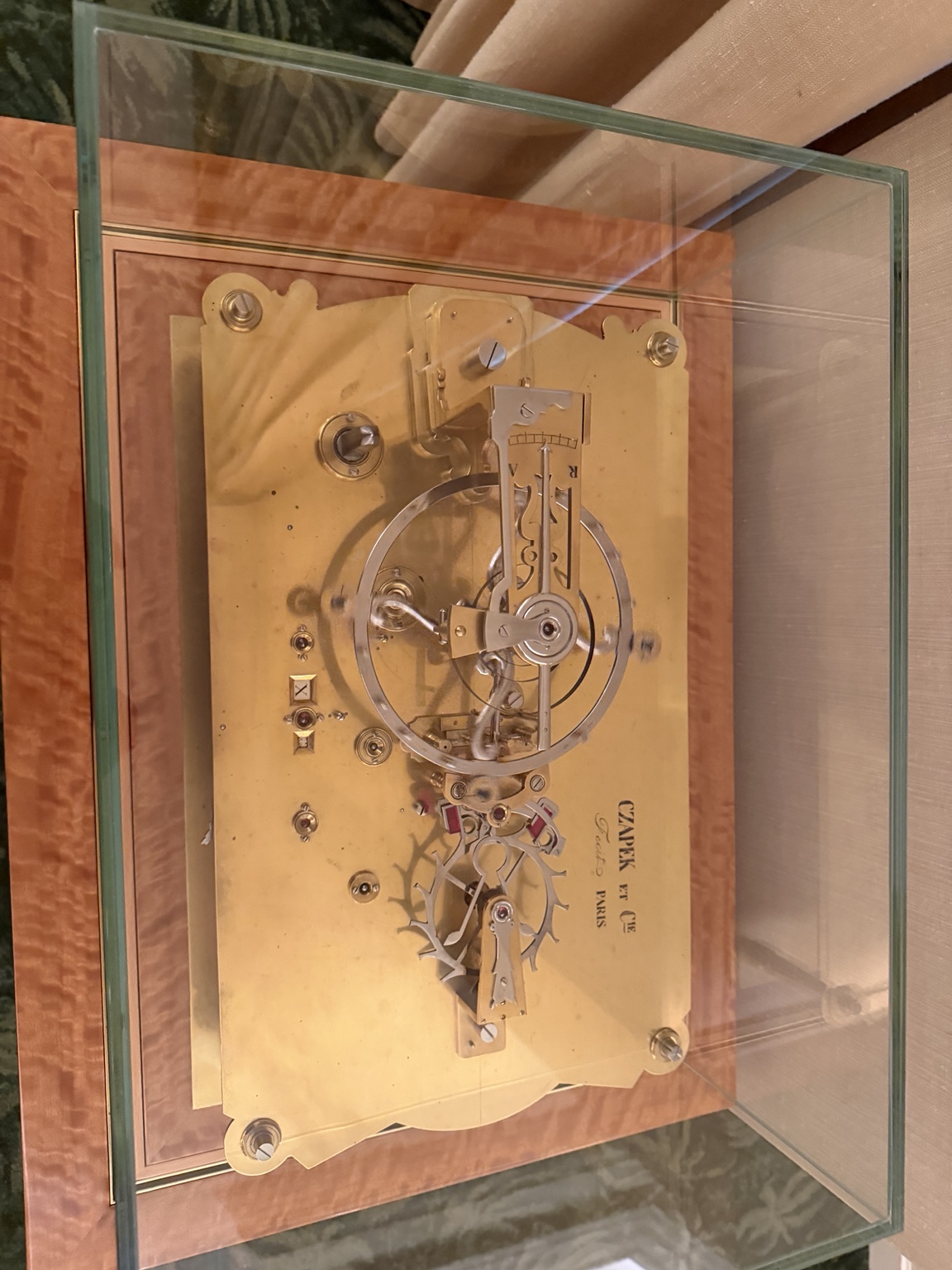
An enlarged mechanism marked Czapek & Cie, Paris reveals what is normally hidden beneath a dial: wheels, balance, levers and regulator. The picture supports a simple mental diagram: stored energy passes through wheels, while the regulating assembly sets the rhythm. The Czapek name also recalls Patek, Czapek & Cie, founded in Geneva in 1839. I do not identify this particular museum model as the movement of a specific reference; its inscription and construction matter in their own right.
10
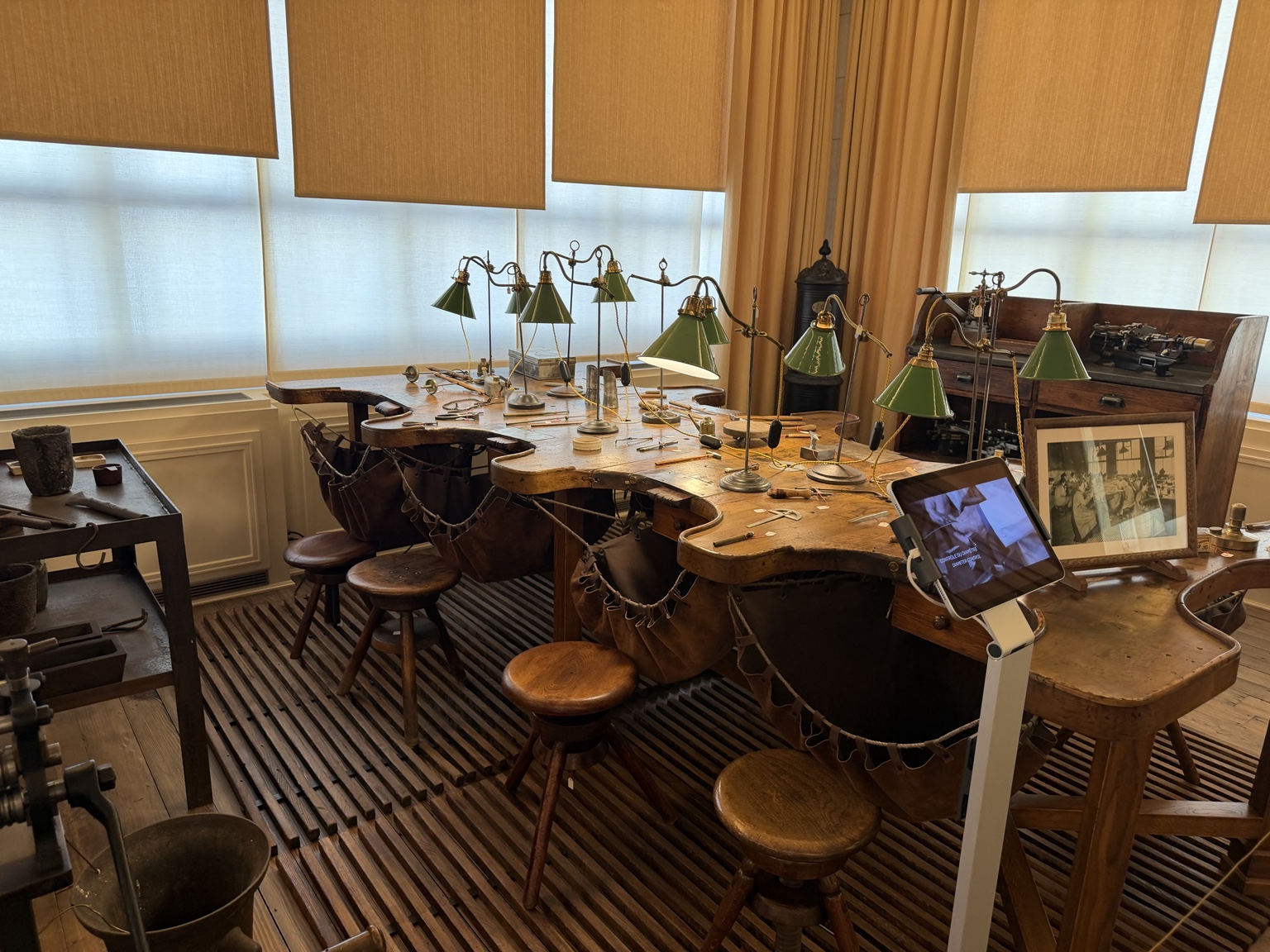
A craftsperson behind every case
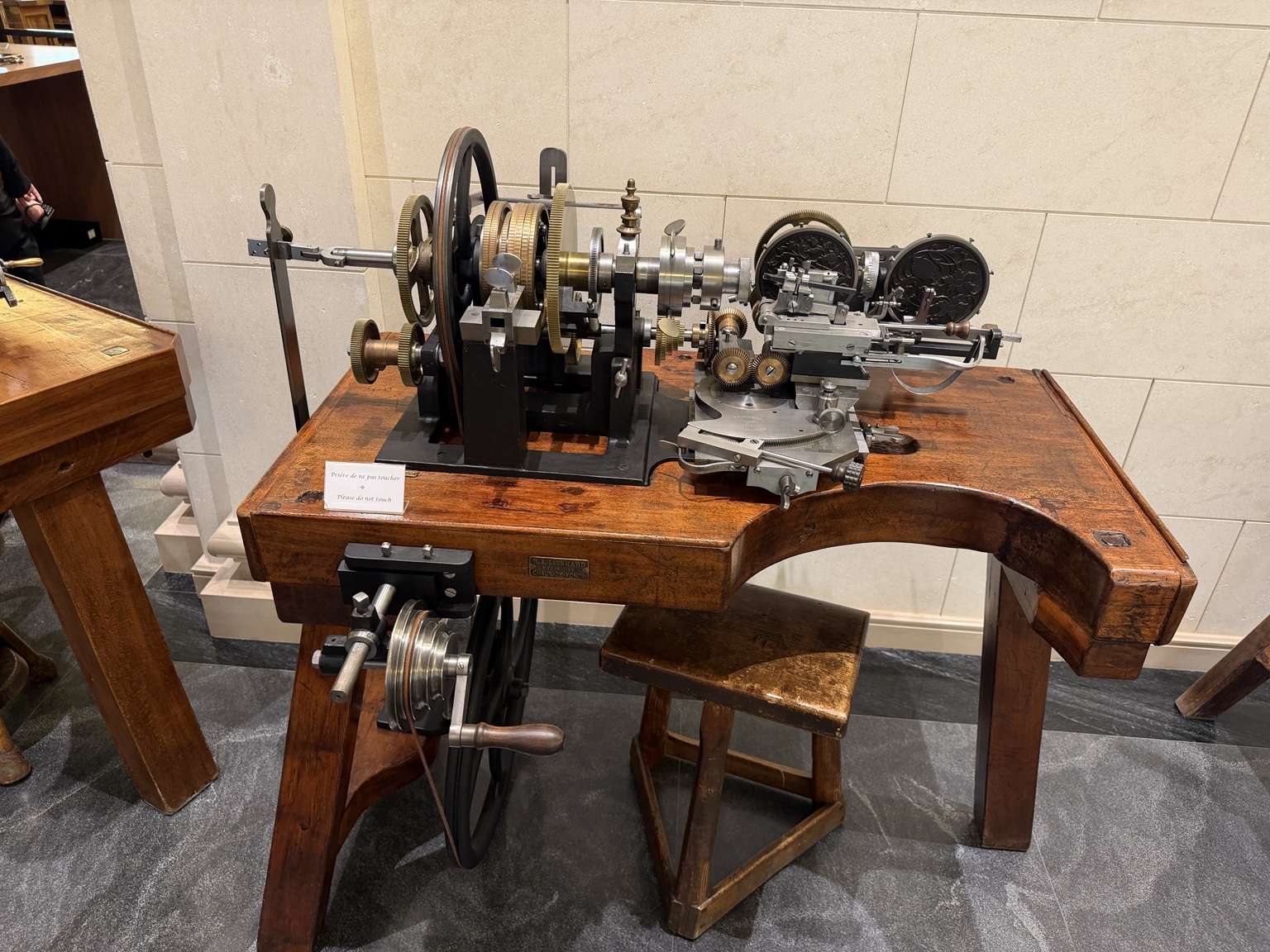
The workbenches bring a human scale to the account. My photograph shows wooden benches with semicircular cut-outs, green lamps, tools and leather catching aprons beneath the tops. Nearby is a substantial mechanical machine with wheels and a drive. It makes clear that watch production consists of many separate operations. For me, these pictures are an important complement to the precious showcases, returning attention to the hands, skill and workplace of the person making or restoring components.
11
Nautilus: a connection to the present
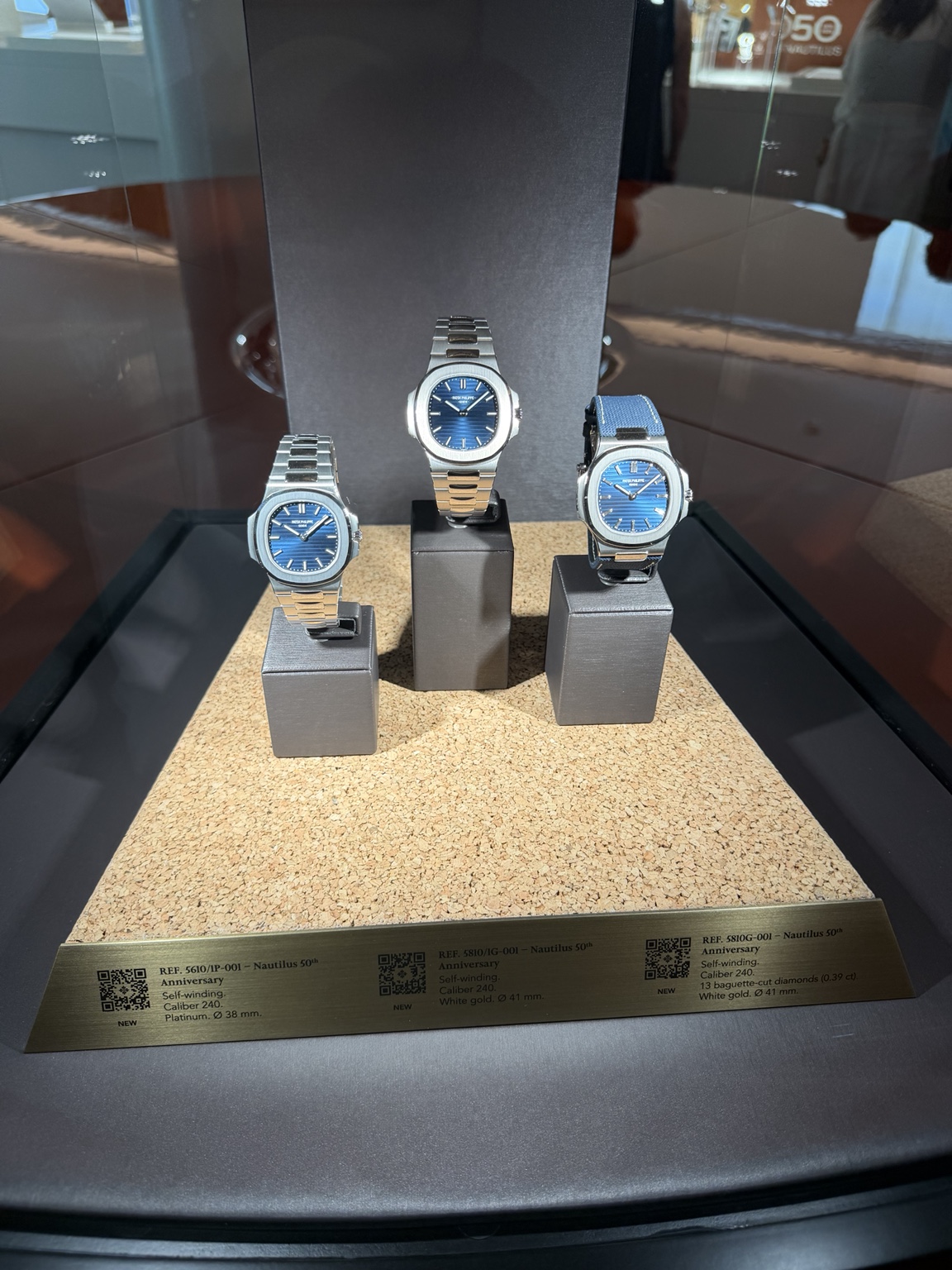
The contemporary part of my photo report shows three anniversary Nautilus watches: 5610/1P-001, 5810/1G-001 and 5810G-001, identifiable on their labels. The collection turned 50 in 2026; the official museum website confirms a special Nautilus retrospective running until early 2027. The photograph is useful for comparing a 38 mm platinum model, a 41 mm white-gold bracelet version and the blue-strap edition. After the antique watches, it connects history with a design that remains alive today.
12
What I want this account to preserve
I wanted to share this visit in exactly this format: photographs, clear explanations and room to linger over details. The museum helps us discuss watches through the history of technology, decorative art and preservation of craft. If you plan a visit, the address is Rue des Vieux-Grenadiers 7, and the official page lists adult admission at CHF 10. Check opening hours and tours before travelling. My advice is to allow time for both the antique collection and the tools: together they explain how many different kinds of knowledge fit inside a small watch case.