
Breguet · Classique Chronométrie 7727
The movement in detail
The movement’s idea
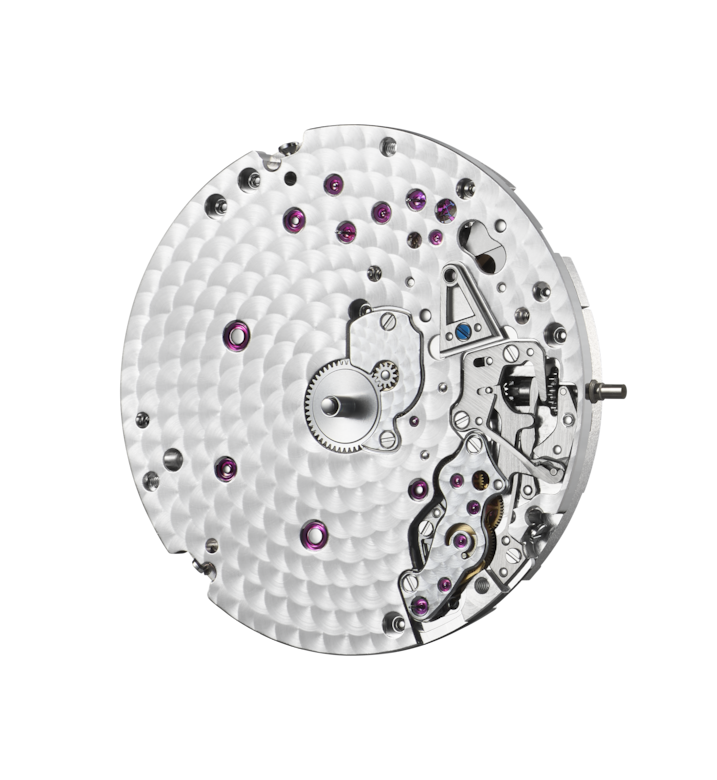
Mechanical watches are usually kept away from strong magnetic fields. Breguet’s Classique Chronométrie 7727 reverses the approach: its designers use a magnetic pivot for the balance staff. The brand says this improves the staff’s position, rotation and stability. It is a local engineering solution inside the movement, not a promise that every component is immune to any magnet.
The manually wound 574 DR runs at 10 Hz—20 vibrations per second. Breguet uses a double silicon hairspring, silicon lever and silicon escape wheel to reach that pace. The watch shows material, escapement and balance support working towards one goal; attributing everything to one magical magnet would be unfair.
The stated reserve is 60 hours. That is particularly interesting at this frequency, but the figure alone does not reveal how the rate changes near the end of the mainspring’s discharge. The dial has a reserve indicator, a practical aid for manual winding compared with blindly turning the crown on a timetable.
Practical meaning
The rose-gold 7727BR/12/9WU has a stated case diameter of 41 mm, thickness of 9.7 mm and 3 bar water resistance. Its 286-part movement can be examined through the transparent back. Frequency and an unusual balance do not make it a sporting instrument: size, precious-metal case and caution around water remain part of the choice.
Breguet quotes an average rate of −1/+3 seconds per day. This is the manufacturer’s model figure, not our measurement of every example; actual rate depends on condition, position and wearing conditions. The page gives neither a confirmed price in UZS nor an open price list, instead directing buyers to a seller.
The 7727 is not a 2026 premiere: Breguet dates its launch to 2013. Read it as a calibre analysis and an example of magnetic resistance and deliberate magnetic-field use coexisting in different assemblies of one mechanical watch.