F.P.Journe · Chronomètre à Résonance
The movement in detail
The movement’s idea
The two dials of the Chronomètre à Résonance represent more than a second time zone. Each has its own gear train, escapement and balance behind it. This technical analysis concerns the calibre 1520 generation, introduced for the model’s twentieth anniversary in 2020. Its distinction is a shared energy source: one winding barrel instead of two. The central question is therefore how to divide energy and keep its delivery to two regulators sufficiently even.
A differential on the first wheel is visible through the central dial aperture. It distributes energy from one barrel between two secondary gear trains. Each then has its own constant-force remontoir operating on a one-second cycle. In simple terms, this is a small intermediate energy store: it is regularly replenished by the main train and releases energy to the escapement in more even portions. Two remontoirs are needed because there are two independent regulators; a common barrel alone does not remove changes in mainspring torque.
Resonance and constant force perform different jobs. The remontoirs even out the supply, while the two balances are designed to synchronise through physical resonance. Unlike an arrangement with a connecting spring between regulators, the brand describes its principle as natural resonance without mechanical transmission between the balances. This does not create additional energy or automatically prove zero timing error. The official page explains the architecture but does not publish a guaranteed daily rate tolerance for this watch.
 Enlarge
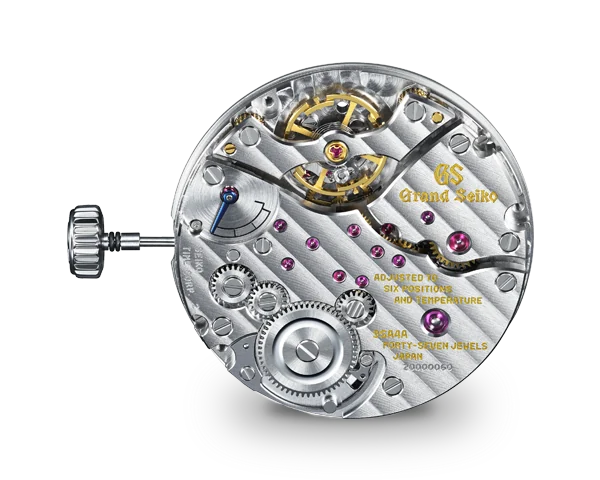
Calibre 1520 through the caseback: the two balances sit in the lower part of the movement.
© Montres Journe SA · SourcePractical meaning
The hand-wound movement in 18-carat rose gold measures 34.60 mm in diameter and 6.90 mm in height; it contains 378 parts and 62 jewels. Both balances run at 3 Hz, or 21,600 vibrations per hour. Total reserve is 42 hours, while the manufacturer separately specifies an effective running period of 28 hours ±2. This is the key limitation: the remaining autonomy cannot automatically be counted as a continuation of the same constant-force regime. Regular daily winding fits the model’s engineering concept better than waiting for a complete stop.
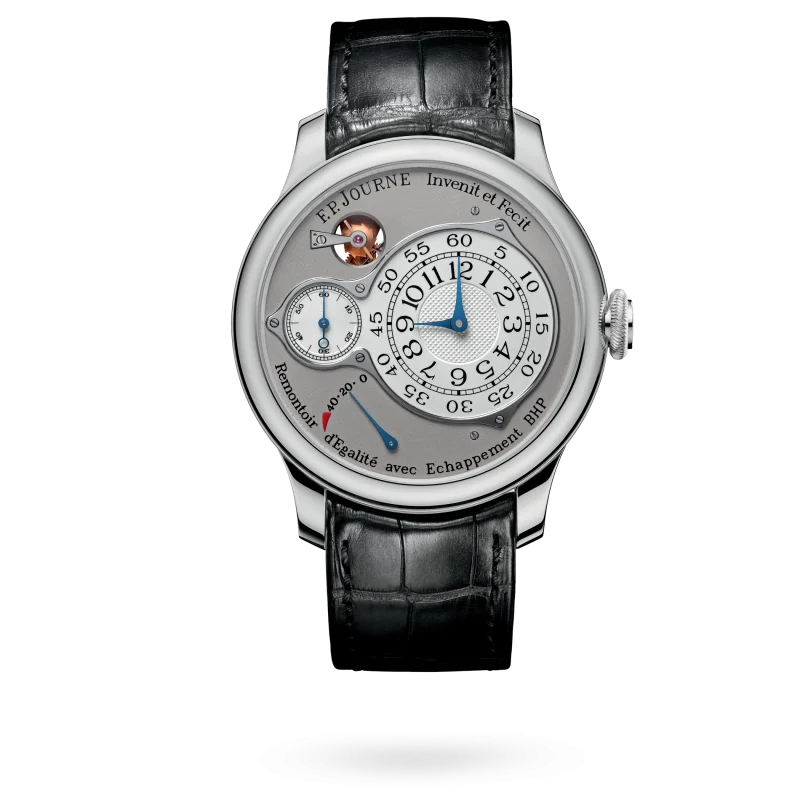
The left display uses a 24-hour scale and the right a 12-hour scale; both have small seconds. The crown at two o’clock winds the movement and sets the left or right time depending on its direction of rotation, while pulling the crown at four simultaneously resets both seconds hands. Cases are offered in 40 or 42 mm diameters with a thickness of 10.8 mm; the photographs show the platinum version on a leather strap. The verified page gives no public price for a specific market: request one from a boutique rather than substituting secondary auction quotations.