
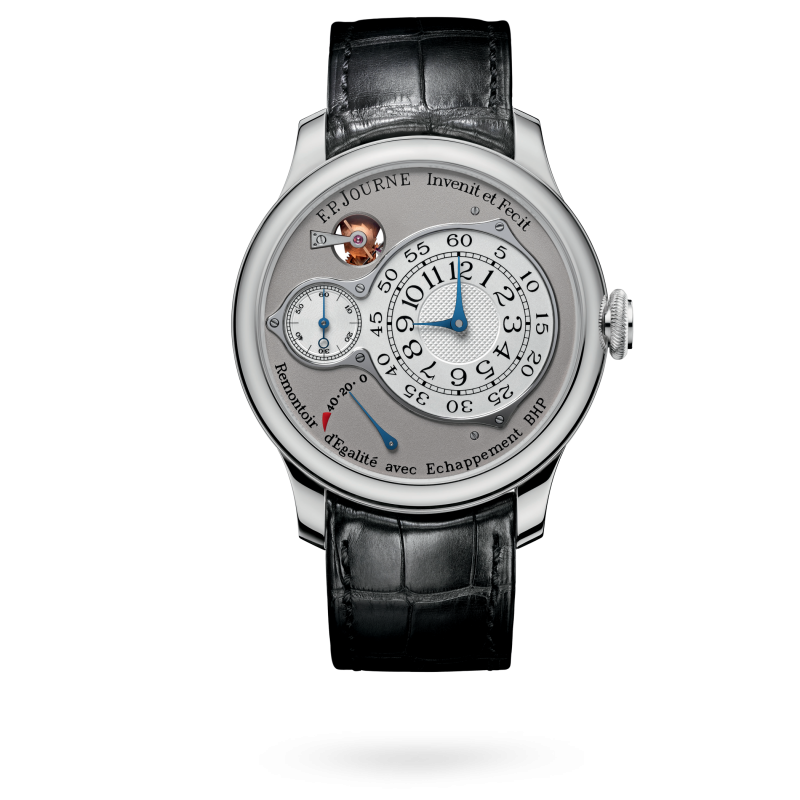
F.P.Journe · Chronomètre Optimum
The movement in detail
The movement’s idea
A large power reserve looks convincing in a catalogue. F.P.Journe went further with the Chronomètre Optimum: the hand-wound calibre 1510, reference CO, also addresses how energy reaches the balance. The entire movement is built around that task.
It starts with two mainspring barrels connected in parallel. F.P.Journe explains that this arrangement reduces lateral load on the main wheel and makes torque transmission more stable. These two barrels address more than the number of hours left before winding.
Next comes the constant-force remontoire. This small energy store between the main spring and escapement is replenished every second. It releases more even portions of energy as the mainsprings lose torque. The lightweight titanium assembly can be seen from the dial side.
Practical meaning
The EBHP escapement has two wheels and delivers impulse directly to the balance. Its working surfaces do not need oil. It is an intriguing mechanical solution, but the other assemblies still need lubrication and servicing. There is no promise of an everlasting watch here.
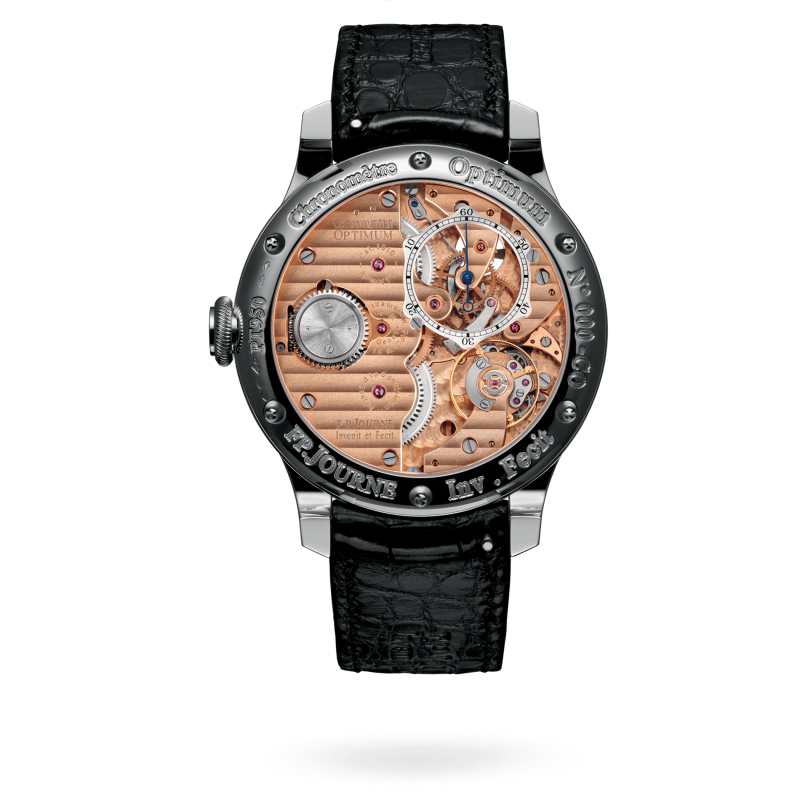
The most unexpected detail is the seconds hand at the back. Linked to the remontoire, it jumps once a second. At the front, the small seconds hand makes 6 steps per second at 3 Hz. Two sides of the same mechanical watch show seconds differently, a fine reason to linger over the display back.
 Enlarge
Calibre 1510 through the case back: a separate mechanical seconds-display scale is visible at the top.
© © F.P.Journe · SourcePower reserve is 70 ± 2 hours. F.P.Journe also highlights the first 45 hours, when the remontoire maintains constant amplitude. Both numbers matter: one answers when the watch will stop, the other how long its most stable operating regime lasts.
Chronomètre Optimum comes in platinum or gold, with a 40 or 42 mm case. The calibre itself is made of 18K rose gold. The off-centre time dial makes the two sizes feel different, so compare them on the wrist before choosing. Price and availability for a specific version need separate confirmation.