Farer · Stratton II
The model in detail
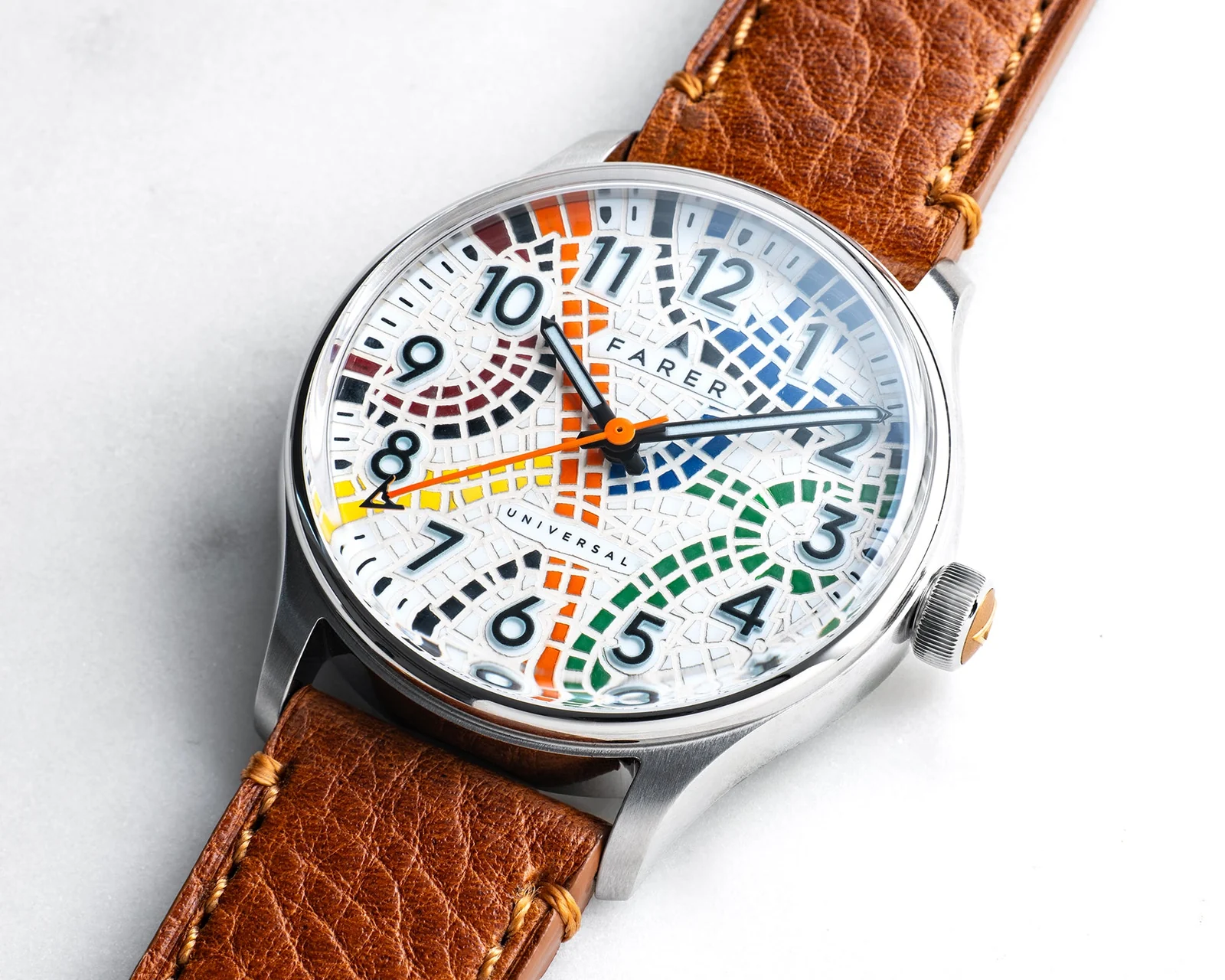
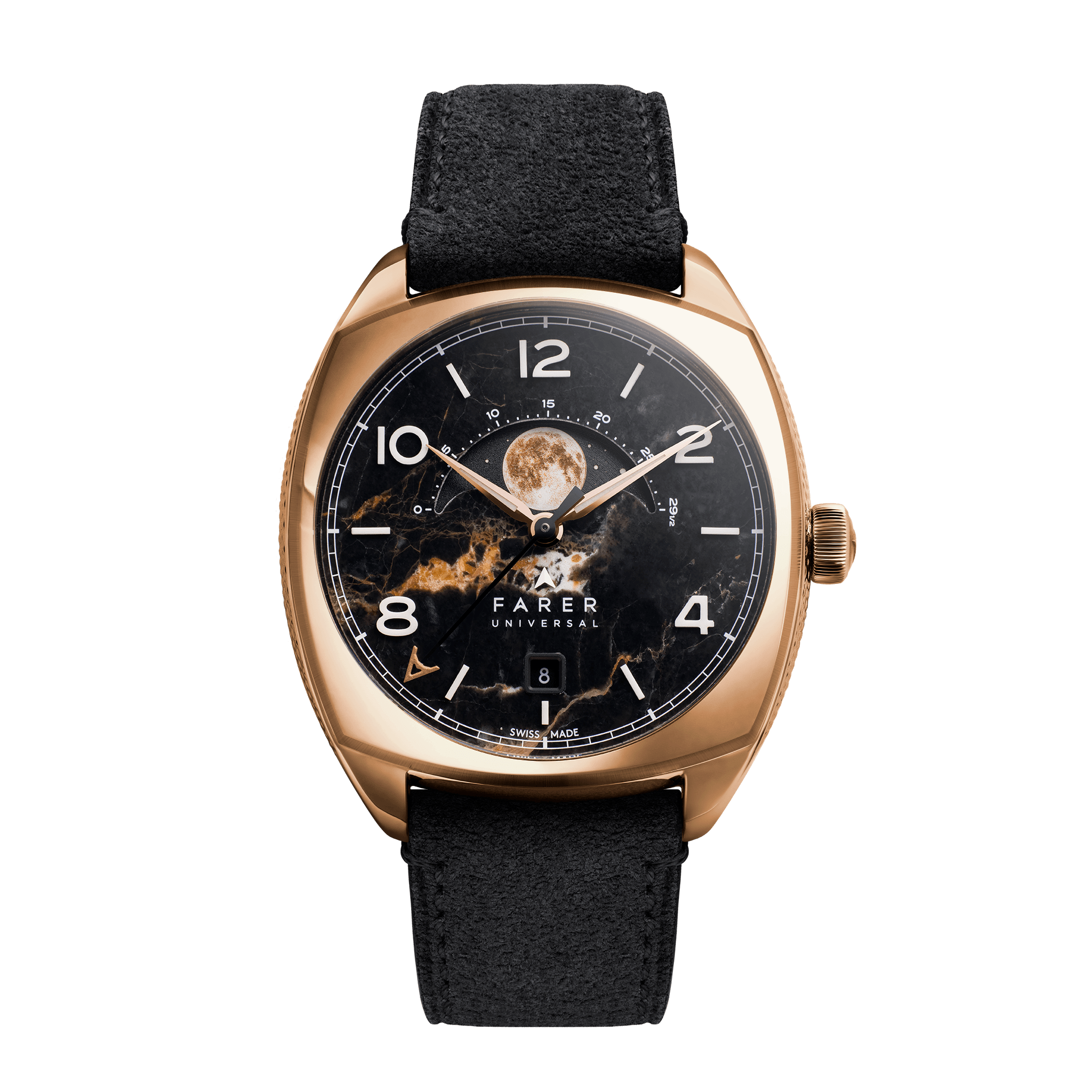
Stratton II chiefly changes the moon itself. Switzerland’s AJS Production creates an image less than 6 mm across by laser micro-etching multiple layers of paint and Super-LumiNova. The result is a more detailed, textured image against black Eisenkiesel, a natural quartz with golden-brown veins. Coverage dated October 29, 2026 discusses the new version; Farer’s product page provides no separate original announcement date.
 Enlarge
The detailed moon and Eisenkiesel pattern, shown on the brown-strap option.
© Farer · SourceA moonphase is a mechanical calendar display. Its disc is linked to the movement’s running and represents changes in the illuminated portion of the moon rather than simply alternating day and night. New graphics make that indication more expressive, but do not imply a new calibre or a different claimed astronomical accuracy. The manufacturer emphasises natural differences between individual stone dials: the photograph conveys their character rather than an exact copy of the dial a buyer will receive.
Inside is the hand-wound Sellita SW288-1 M a Elaboré with hacking seconds and quick corrections for the date and moon display. It runs at 4 Hz, has 18 jewels and approximately 45 hours of reserve when fully wound. The transparent back reveals the decorated bridge and blued screws. No rotor obstructs the mechanism, but none replenishes its energy either: owners rotating watches will need to remember to wind it.
 Enlarge
The hand-wound Sellita through the sapphire back, without an automatic rotor.
© Farer · SourceThe official page specifies a 316L steel case measuring 38.5 mm across, 11.5 mm thick and 43.8 mm lug-to-lug, with 5 ATM water resistance. Some reviews give different dimensions, so the figures here follow Farer. The UK website price is £1,895. Shipping is stated for December 21; the simultaneous preorder and availability-notification controls mean the selected strap option should be checked before ordering.