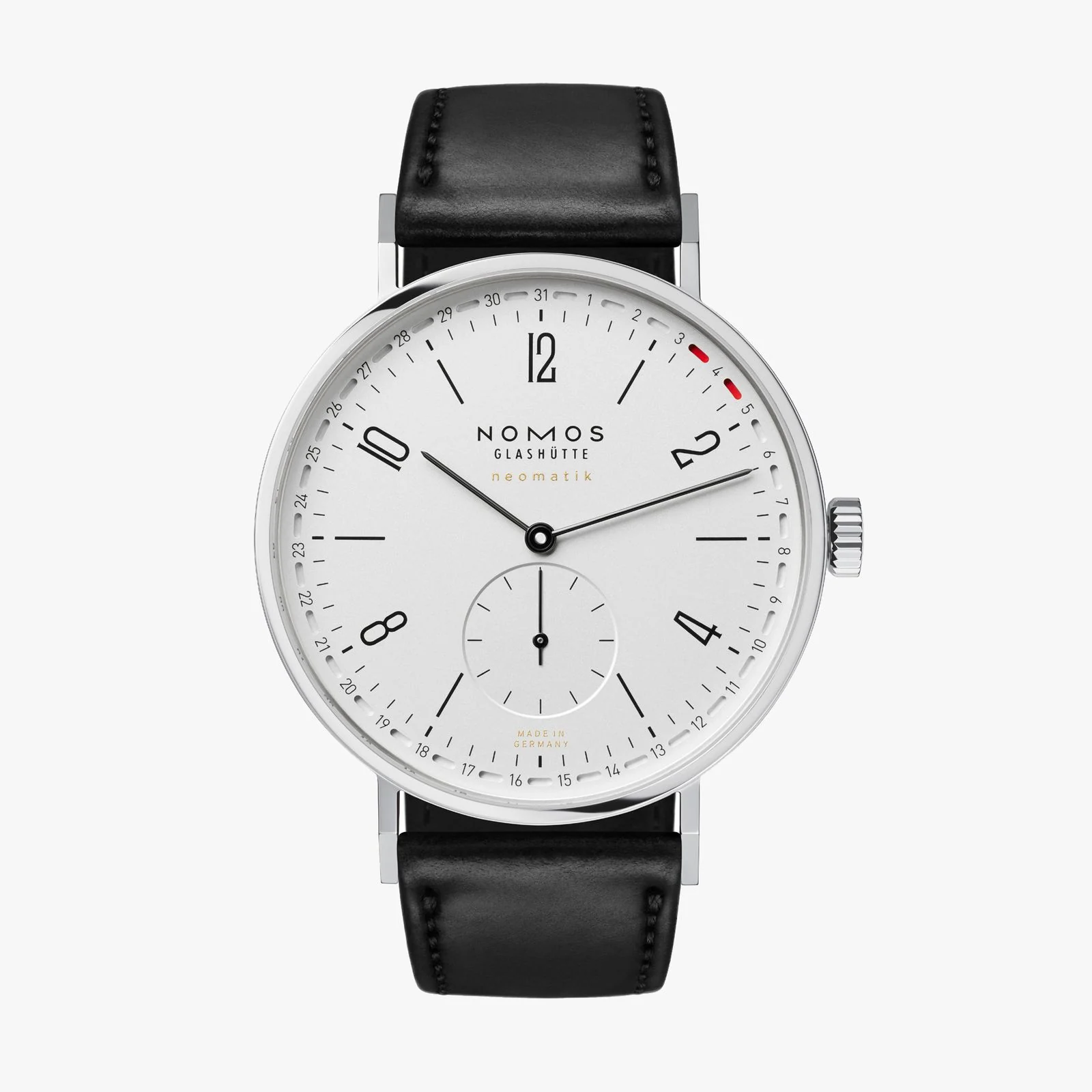
NOMOS Glashütte · История марки / DUW 3001
The movement in detail
The movement’s idea
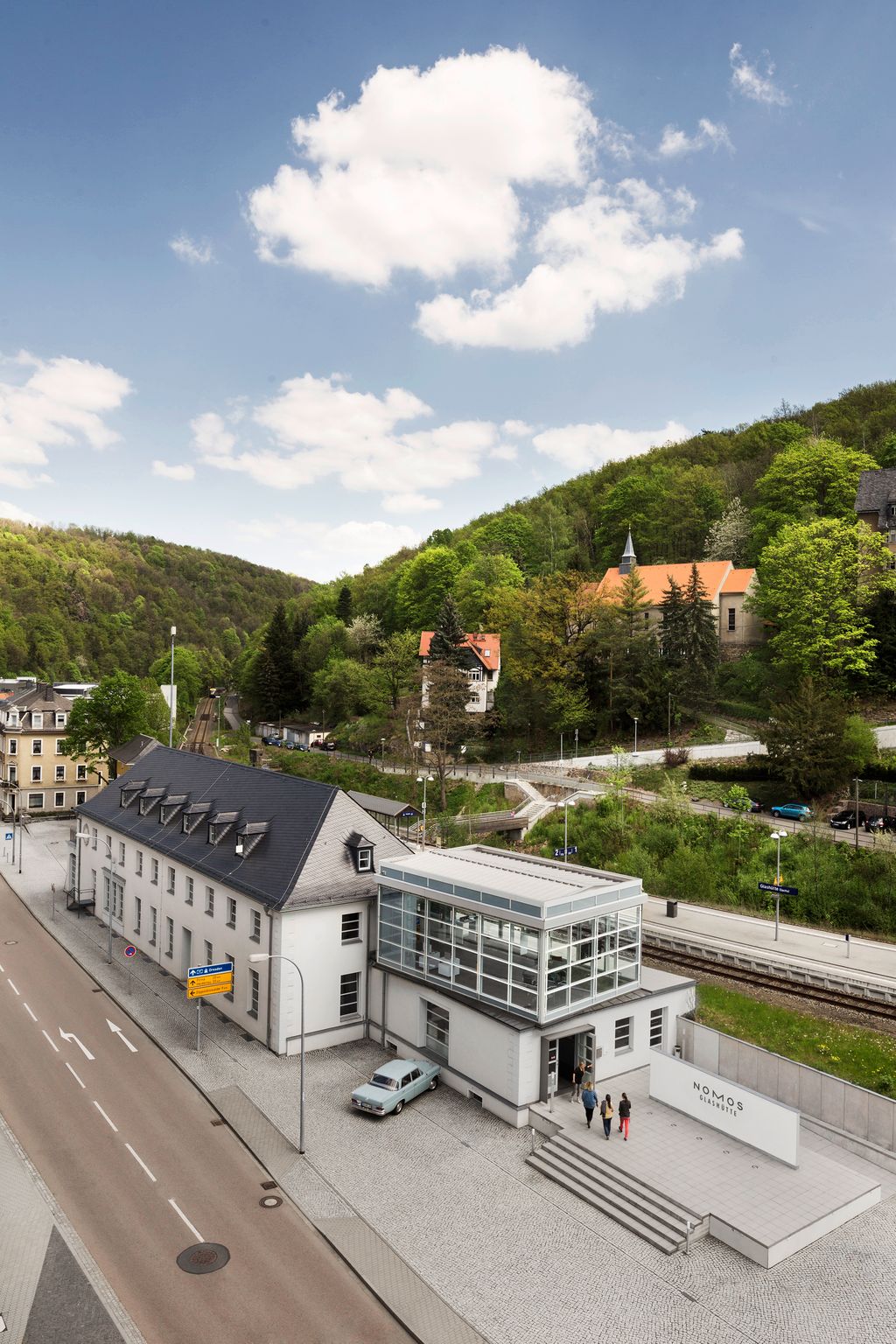
NOMOS is worth reading through its own chronology. Roland Schwertner founded the company in Glashütte in 1990. The town and the brand have different biographies: the local watchmaking tradition explains the setting, while the company’s own story begins with its foundation.
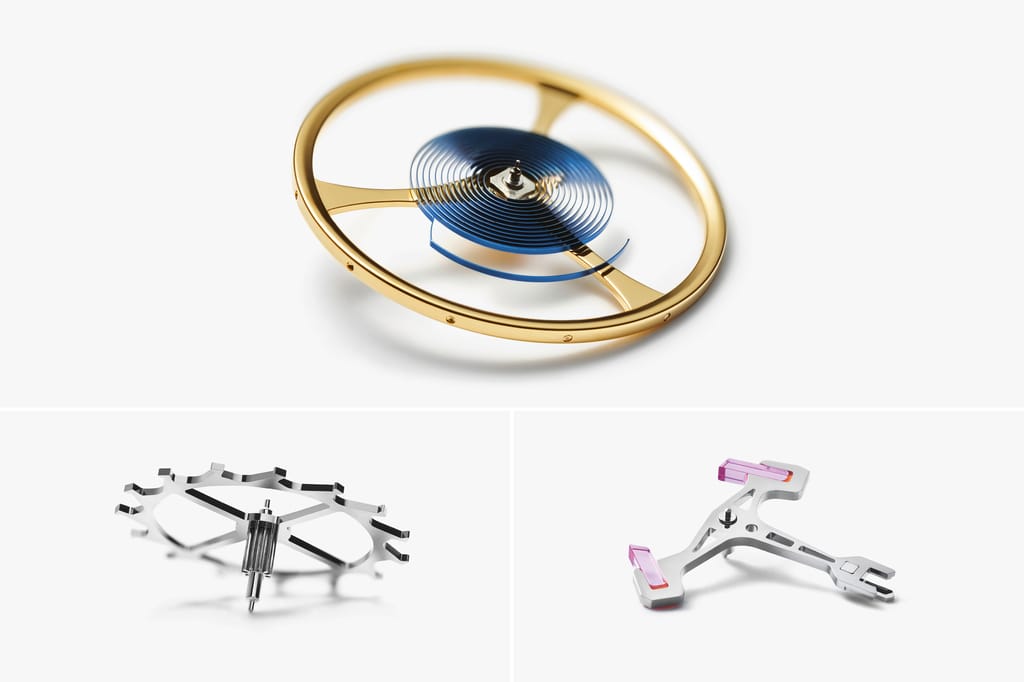
Technical independence consists of specific components. In a mechanical watch, a spring stores energy, a gear train delivers it to the escapement, and the balance and spring establish the rhythm. The connection between the escapement and oscillating system allows a movement to measure time instead of simply spinning the hands rapidly.
In 2014, NOMOS introduced its proprietary swing system. According to the company, development took seven years and 11 million euros; Dresden University of Technology and the Fraunhofer Institute participated. A short name on a technical page turns out to represent a research programme of its own.
 Enlarge
Balance and spring, escape wheel and pallet fork: components of the NOMOS swing system.
© NOMOS Glashütte · SourcePractical meaning
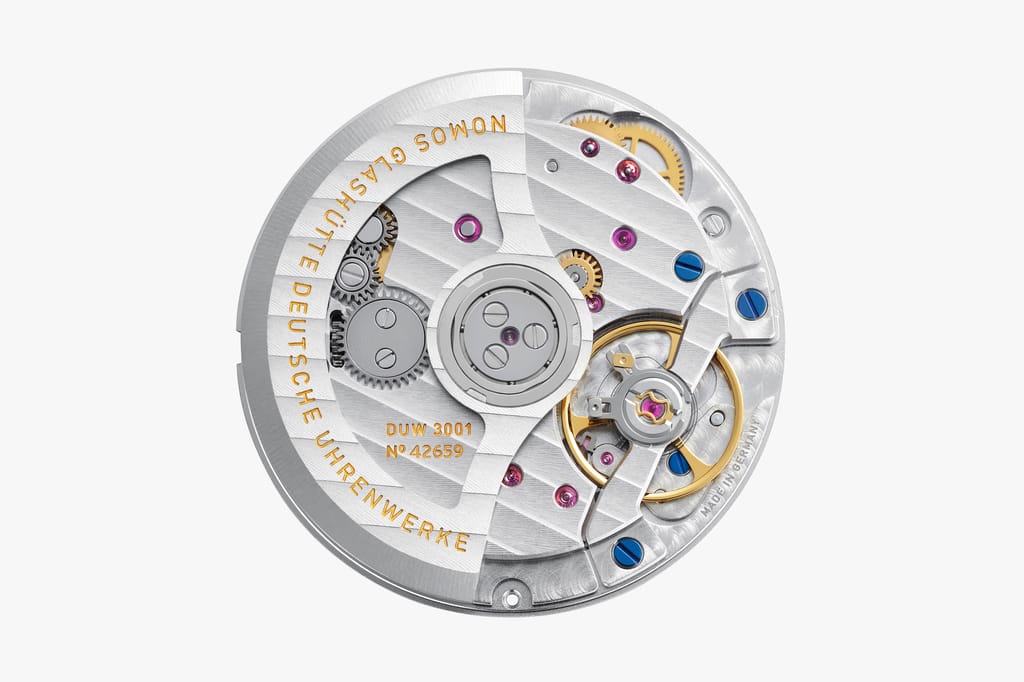
The next milestone was 2015 and the first neomatik, DUW 3001. The movement combined automatic winding with a thickness of 3.2 mm. For the owner, the point is straightforward: automatic convenience can coexist with a slim watch. The finished model’s height still depends on its case and crystal.
DUW 3001 has a bidirectional rotor, hacking seconds and up to 43 hours of power reserve. Those figures reveal the design priorities: compactness and everyday winding. For someone who regularly rotates watches and leaves them off for several days, running time without movement remains a separate buying criterion.
 Enlarge
DUW 3001 from the rotor side: an automatic platform measuring 3.2 mm thick.
© NOMOS Glashütte · SourceWe see a clear sequence in this history: establishing the company, creating its own regulating system, then developing a slim automatic platform. Reading a brand’s biography this way is useful beyond NOMOS: compare its foundation date with the dates of specific engineering projects and examine what those projects changed in the watches.