MB&F · HM3 FrogX Blue
The model in detail
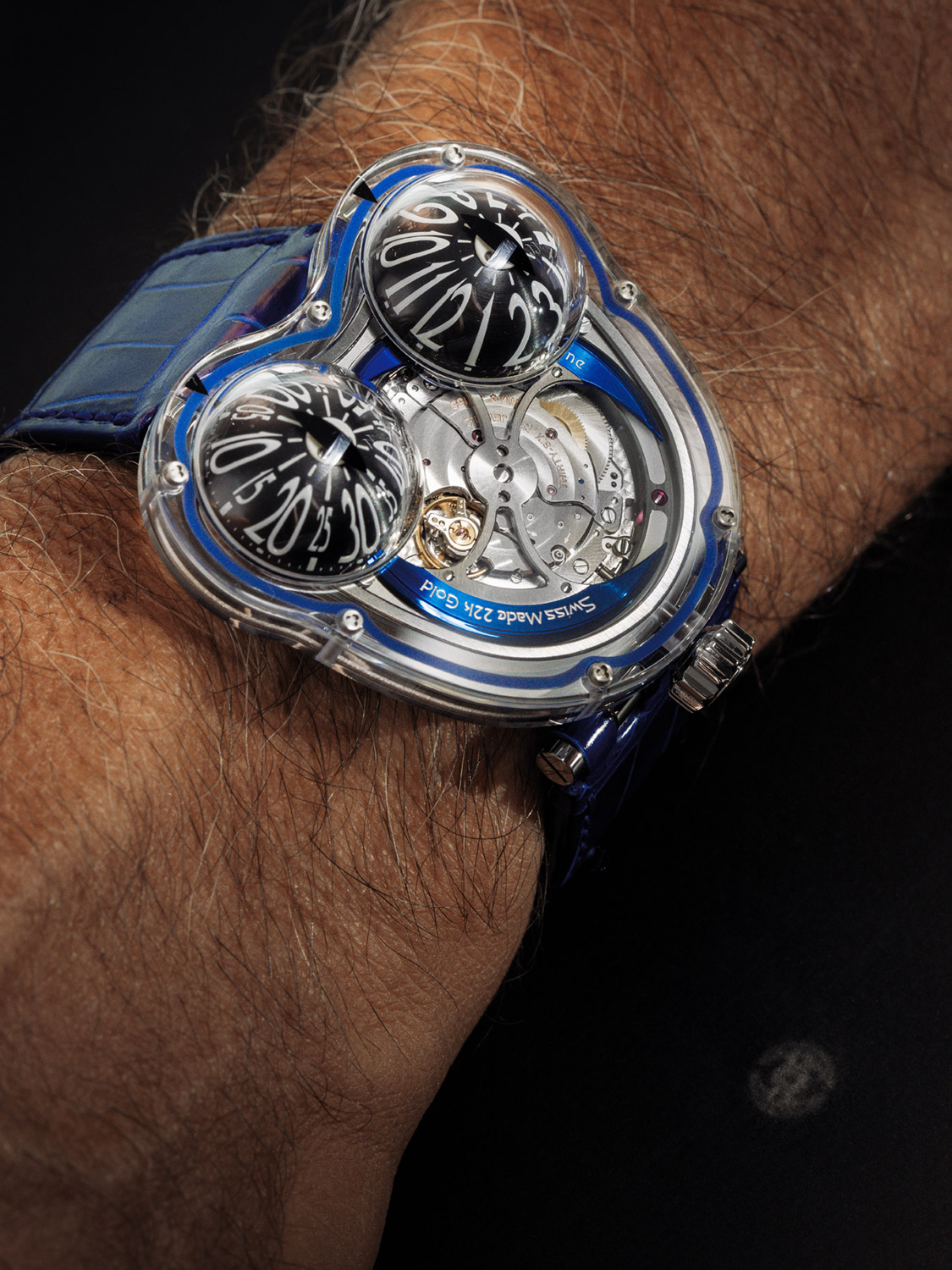
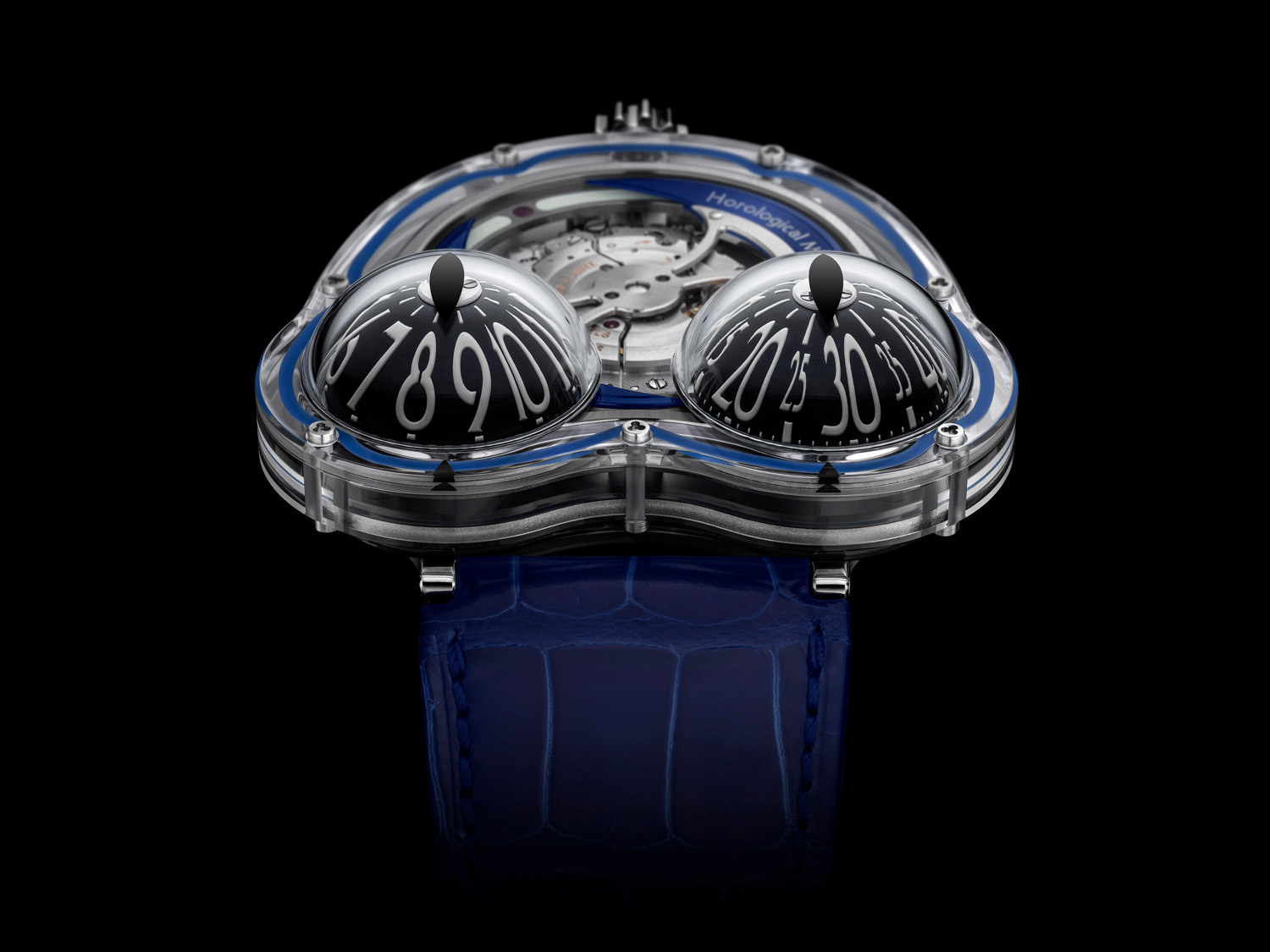
Read one numeral against the fixed pointer in each “eye.” The aluminium hemispheres inside turn: the hour dome takes 12 hours to complete a revolution, the minute dome 60 minutes. The sapphire covers stay put. Keeping the numerals undistorted near the edges meant grinding the crystal to a uniform thickness all the way around its curve.
 Enlarge
The fixed pointers and rotating aluminium scales are visible beneath the clear sapphire covers.
© Laurent-Xavier Moulin / MB&F · SourceBetween the eyes sits the automatic winding rotor, made of titanium and 22-karat gold. To show both rotor and balance from the front, Jean-Marc Wiederrecht and the Agenhor team inverted the Girard-Perregaux base movement. That put the display drive on the underside. A 15 mm ceramic ball bearing transmits rotation to each dome. Each bearing needs support from only one side, avoiding the need for another bridge above the dome.
The first Frog, released in 2010, had a metal case. For its tenth anniversary in 2020, MB&F made the FrogX case from sapphire and dropped the date to make room for a larger rotor. Ten of the thirty anniversary watches have a blue rotor and gasket; purple and turquoise accounted for ten each. The FHH archive lists CHF 138,000, a historical reference price rather than a current asking price.
 Enlarge
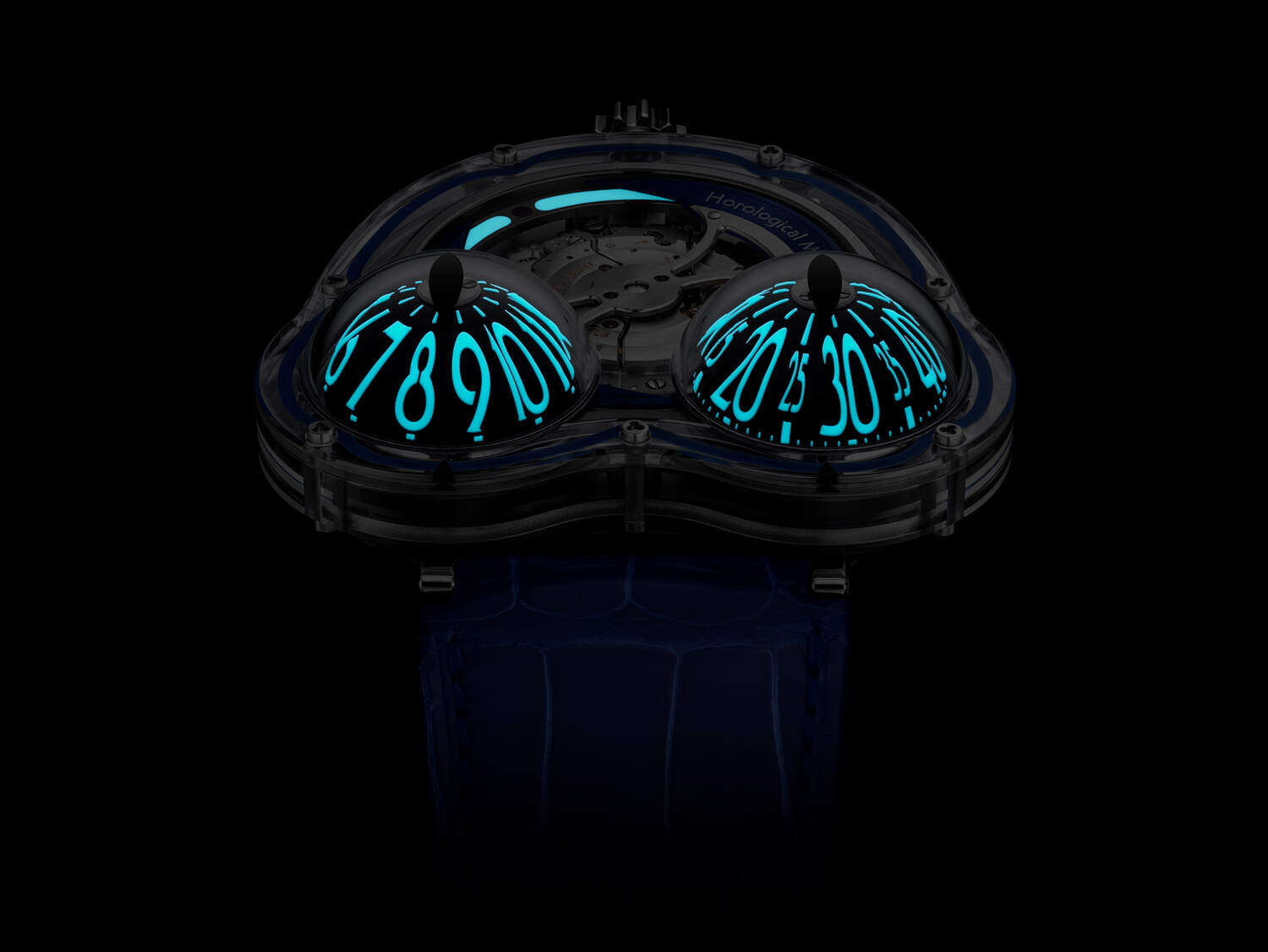
The dome numerals and the segments beneath the rotor glow in the dark.
© Laurent-Xavier Moulin / MB&F · SourceThe night photograph picks out luminous numerals and segments beneath the rotor. The winding crown conceals a different optical trick: its microscopic relief directs light onto a nearby surface to form MB&F’s battle-axe emblem. The angle is easier to appreciate in the official FrogX film; the first source links to the media centre with the player.