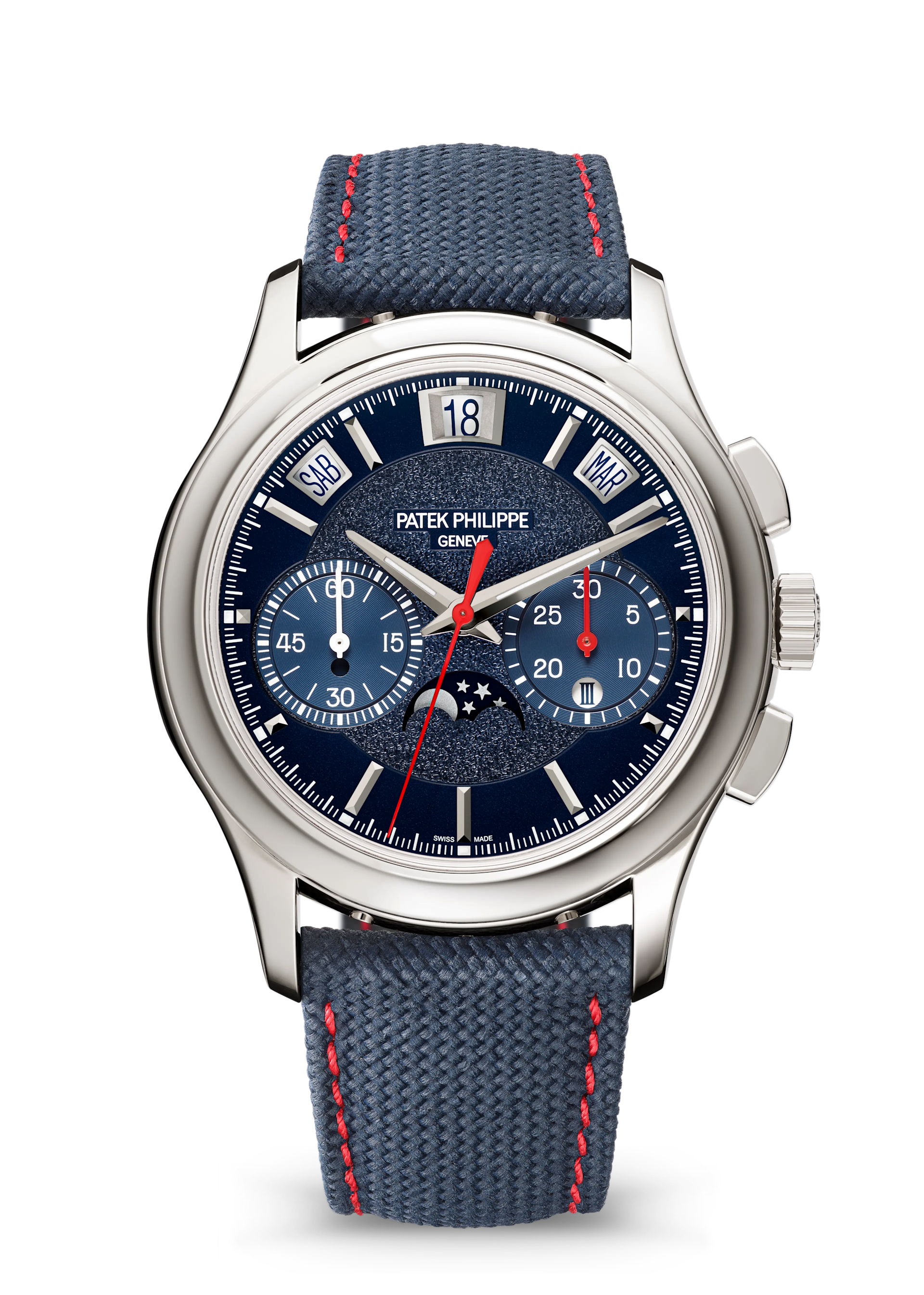
Rolex · Perpetual Padellone
The movement in detail
The movement’s idea
Calendar watches often change the date gradually. Here the weekday, date and month all jump together at midnight. Rolex's automatic calibre 7190, introduced in 2026, powers the Perpetual Padellone. Two windows at 12, a peripheral pointer date and a moonphase disc at 6 show its complexity immediately, but the main work happens below the dial.
Haplos distinguishes months of 30 and 31 days. Rolex says two components are added to the instantaneous date mechanism: an additional carrier finger and an annual lever. The month's program sits on the back of the month disc and tells the lever which month it is. The owner normally corrects the calendar only when February gives way to March. This is an annual calendar, not a perpetual one.
Calibre 7190 is related to the 7135 introduced in the Land-Dweller in 2025. It inherits the silicon Dynapulse escapement and regulating system, so those parts should not be presented as inventions debuting in the Padellone. The 7190 runs at 5 Hz and offers about 66 hours from a full wind, with a rotor providing automatic winding.
Practical meaning
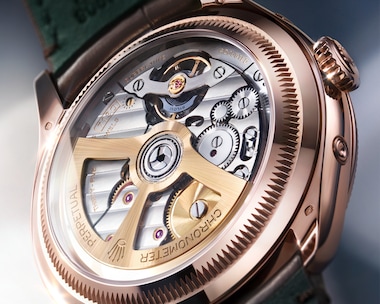
The moon disc completes a turn in 29.53 days; its full and new moons are made of meteorite. It is a pleasing counterpoint to the strict logic of Haplos. The Padellone has a 39 mm case, transparent back and side correctors for the calendar. The decorated bridges and openworked gold rotor are visible through the back, but the two Haplos components cannot be inspected from outside.
The practical gain is fewer manual date corrections and a synchronized change of three indications at midnight. The practical caution is to consult the manual before using the side correctors: the sequence for setting a complicated calendar matters more than a striking count of patent applications. The 66-hour and 5 Hz figures describe the movement; they do not mean the watch will never need resetting.