CREATIVE TIME · Гид по часовым группам
The movement in detail
The movement’s idea
A Swiss brand can belong to a Japanese group while retaining its own watchmaking history. Frederique Constant and Alpina illustrate this within Citizen. An ownership map explains a great deal if you distinguish three relationships: owning a company, holding a stake in it, and supplying movements. These are selected examples checked on 11 October 2026, rather than a complete register of every watch brand.
Swatch Group is a large family of distinct identities. Its brands include Tissot, Hamilton, Mido, Certina, Rado, Longines, Omega, Blancpain, Breguet and Glashütte Original. Movement maker ETA belongs to the same group. Finding Tissot and Omega next to each other on a corporate chart does not establish that their calibres, finishing or servicing costs are identical.
 Enlarge
A manufacturing image from Swatch Group’s official page. Alongside its brand portfolio, the group includes companies making movements and components.
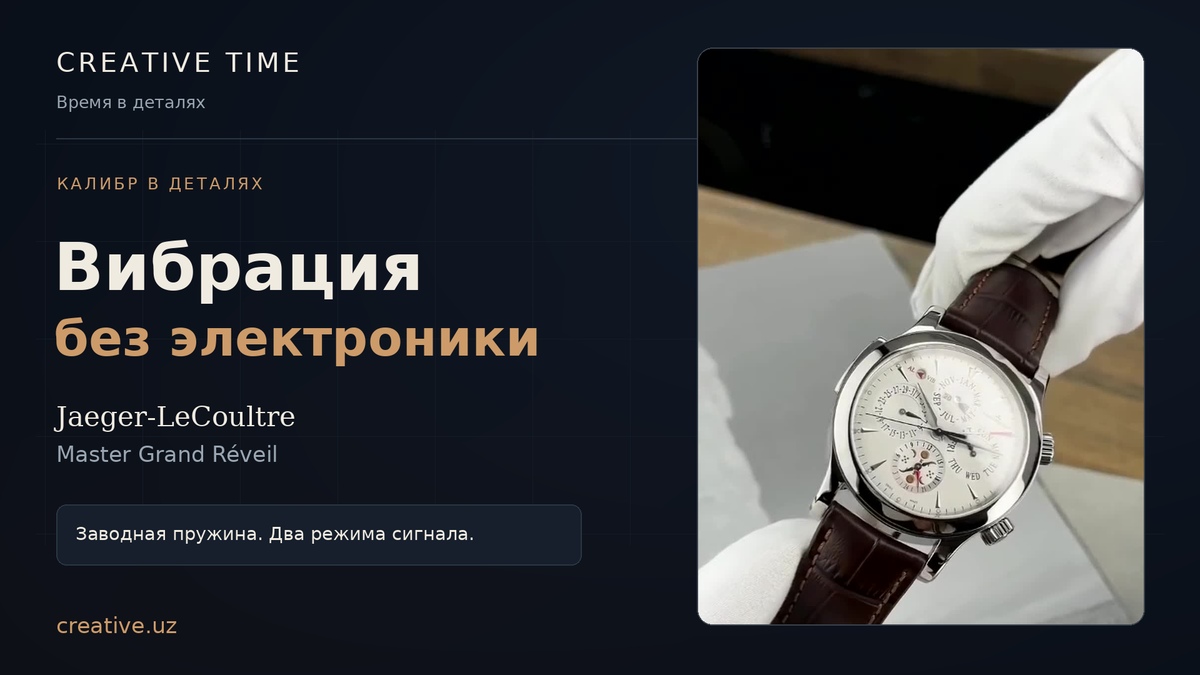
© © Swatch Group · SourceRichemont brings together Cartier, Jaeger-LeCoultre, IWC, Panerai, Piaget, Vacheron Constantin, A. Lange & Söhne and Roger Dubuis; Montblanc also belongs to the group. It helps to distinguish the owner’s name from the manufacture’s: buyers choose a particular watch, its construction and execution. Membership of Richemont alone does not justify transferring specifications from one brand to another.
Practical meaning
LVMH is another major hub: TAG Heuer, Zenith, Hublot, Bvlgari and Tiffany & Co. are in its portfolio. These names appear in very different parts of a watch showcase. A corporate map helps explain the business structure, but it does not replace a comparison of individual movements and models.
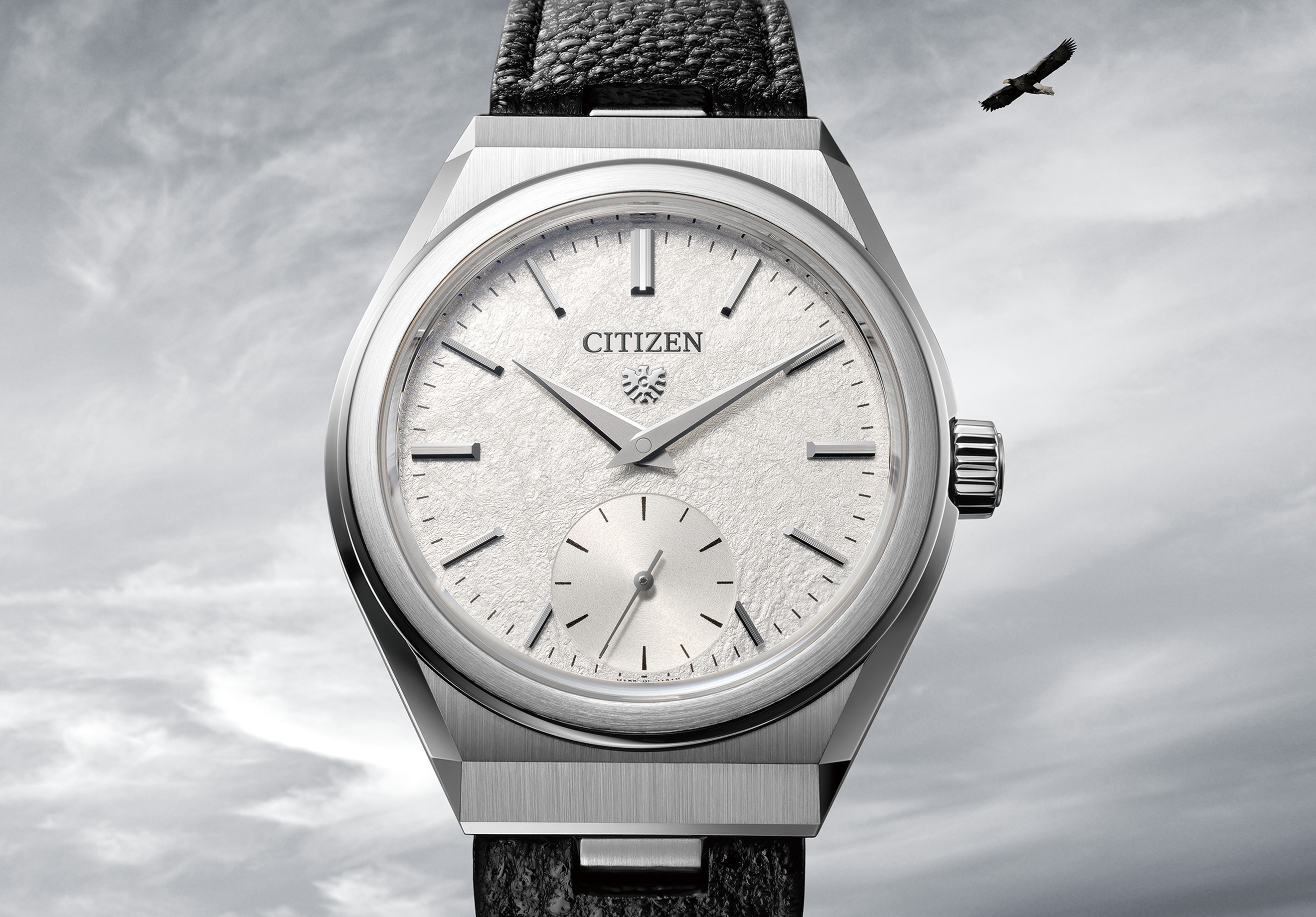
Citizen extends far beyond the CITIZEN name on a dial. Its watch portfolio includes Bulova, Frederique Constant, Alpina, Arnold & Son and Campanola. Miyota represents the movement business. So it is worth clarifying the question ‘Which country is this watch from?’ Do we mean the owner, the brand’s origins or the place of manufacture? The answers can differ.
 Enlarge
A CITIZEN watch on the group’s official watch-business page. The same page lists Bulova, Frederique Constant, Alpina, Arnold & Son and Campanola, with Miyota identified as the movement business.
© © CITIZEN WATCH CO., LTD. · SourceLa Joux-Perret shows how groups intersect. The Swiss movement maker joined Citizen Group in 2012, and on 12 November 2025 Citizen announced an investment by LVMH in its capital. This is a separate relationship between companies; it does not mean that all Citizen brands have moved to LVMH. One logo on a chart can involve several business relationships.
Chanel should not be read as one wholly owned watch group either. In the partnership announced in August 2024, Chanel acquired 25% of MB&F, with Maximilian Büsser retaining 60% and Serge Kriknoff 15%. This illustrates an equity stake. The same MB&F announcement mentions Chanel’s investments in Romain Gauthier and F.P. Journe, which retained independent management.
Kenissi connects brands through manufacturing. According to its own history, Tudor established it in 2016 for its movements and third-party customers, with Breitling as its first partner. An alliance with Chanel followed in 2018, supplying the calibre for the J12. An arrow towards a supplier does not mean a brand acquisition. We do not repeat percentages from social-media charts without separate confirmation.
In the Japanese part of the map, distinguish Seiko Group from Seiko Epson. Seiko, Grand Seiko and Credor are represented in Seiko Watch Corporation’s watch business; Seiko Epson develops Orient and Orient Star today. A similar name does not make these two corporate structures one. Buyers should check the specific manufacturer and service arrangements rather than assign all Japanese watches to one owner.
Now move from ownership to the part inside a watch. The main photograph shows the automatic La Joux-Perret G100. Its maker specifies a 68-hour power reserve, a 4 Hz frequency and dimensions of 25.6 × 4.45 mm: these are movement dimensions, not a watch-case size. The catalogue offers different finishing and regulation options. Even a familiar calibre designation should be read alongside the particular model’s execution.
Read a useful chart in three passes. First identify the brand’s owner. Then check whether the relationship is full ownership or a stake. Finally follow the manufacturing link: who develops and supplies the movement? Reducing everything to identical arrows makes it easy to mistake cooperation for an acquisition, or assume that every customer of one supplier receives exactly the same watch.
Our practical conclusion: knowing the group helps you ask a seller precise questions, but it should not choose the watch for you. Compare the reference, calibre version, stated accuracy, finishing, fit and service terms. Belonging to a large group does not guarantee superiority, and independence alone does not establish better quality. Which construction justifies the premium is a more interesting question than the size of the owner’s logo.