Lorige · BL-Evolution Competition
The model in detail
Meet the watch
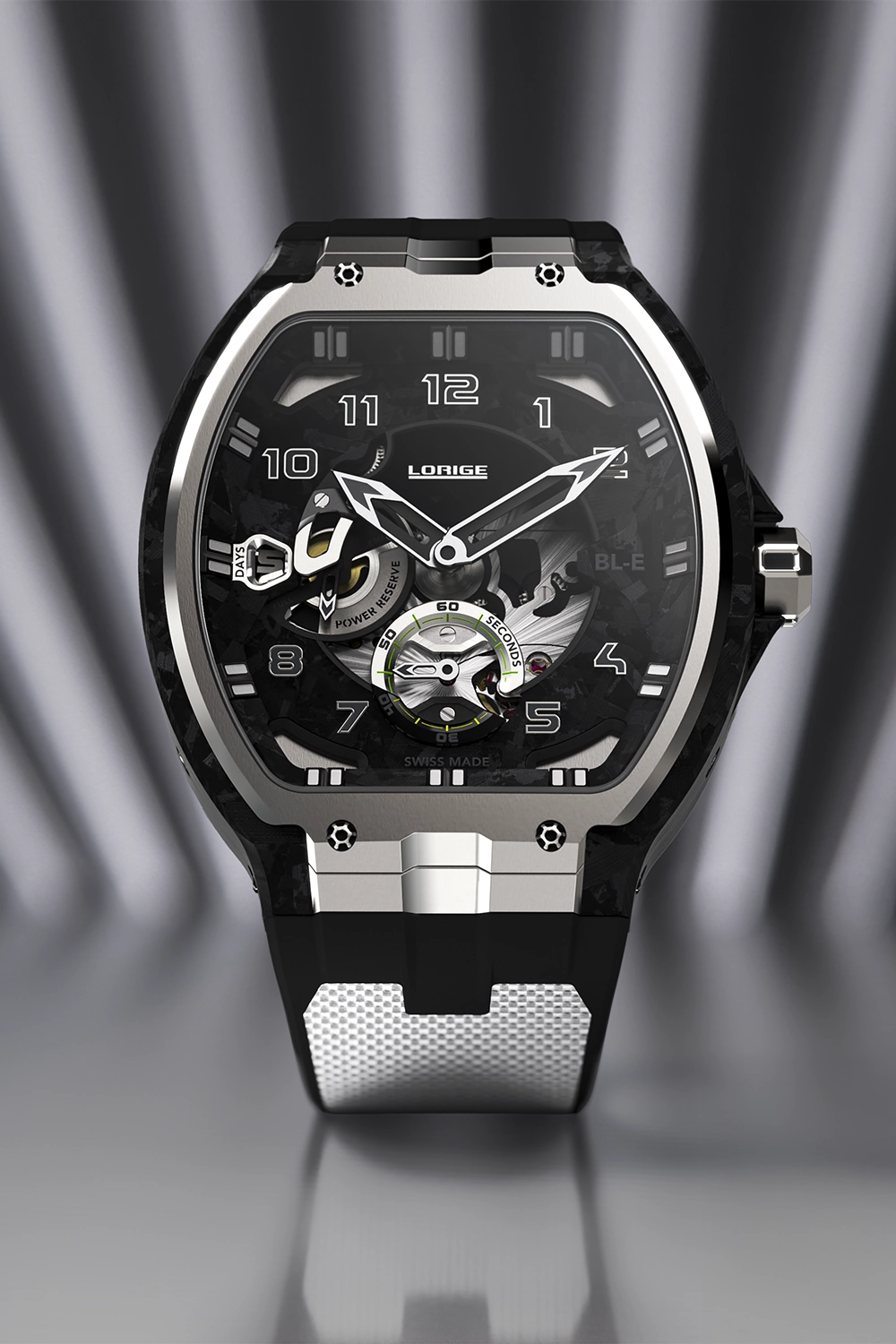
The Lorige BL-Evolution Competition case is most interesting as an object given a second purpose. According to the brand, its Carbon/Carbon comes from Inter Europol Competition racing brakes. Here, the connection with racing runs through the material itself rather than merely a logo on the dial.
Processing matters. Lorige describes a sequence in which used brake material is first roughly shaped, then its pores are reinforced with resin before further machining. Heat and vacuum cycles form part of the densification technology. This is not simply a brake pad cut into the outline of a watch: the material is deliberately prepared for another life.
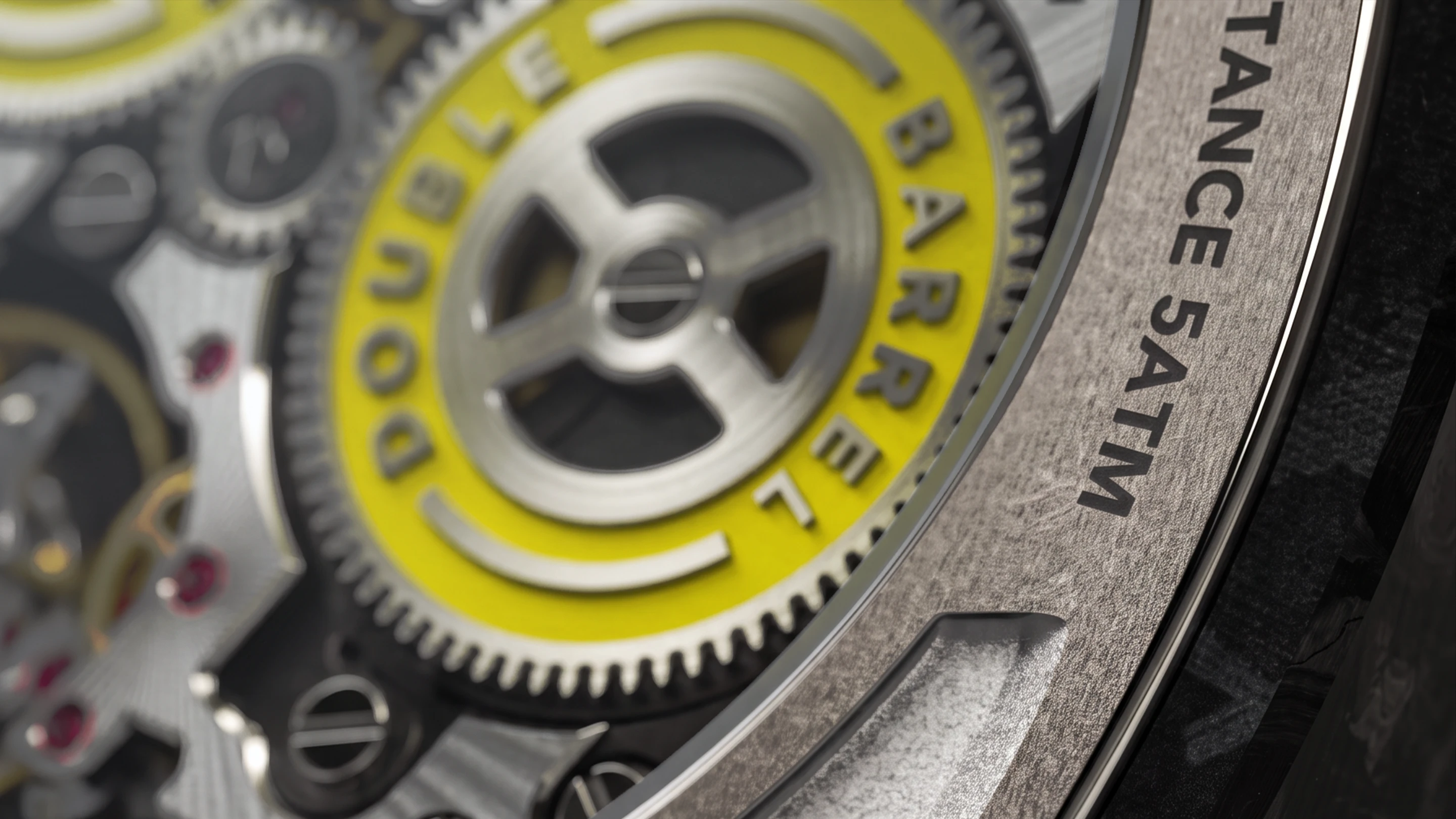
The hand-wound LOR-DB03 uses two barrels and is rated for 168 hours. Seven days change the rhythm of ownership: winding can become a weekly appointment. The power-reserve indicator arguably earns its place more convincingly than a calendar here, reporting the movement’s own energy rather than an outside schedule.
 Enlarge
Movement detail and the 5 ATM water-resistance marking.
© Lorige · SourceDetails and limitations
The sporty exterior conceals a relatively slim construction: the 50 × 42 mm case is 10.30 mm thick. Its length should not be overlooked, however. A prospective buyer should judge how the case sits along the wrist rather than concentrating only on the familiar 42 mm width.
The watch displays hours, minutes and seconds, but there is no stopwatch. That is an interesting choice for a racing theme: Competition invites you to observe the mechanism rather than time laps. Open areas and the bright seconds zone create several points of attention; anyone who prefers an exceptionally clean dial may find the composition too busy.
Production is limited to 50 watches. The official page lists CHF 29,750 excluding VAT and invites enquiries about availability. The principal appeal is the case’s provenance paired with a week-long hand-wound movement. If the material’s history has no personal resonance, Competition is difficult to choose on functions alone.