
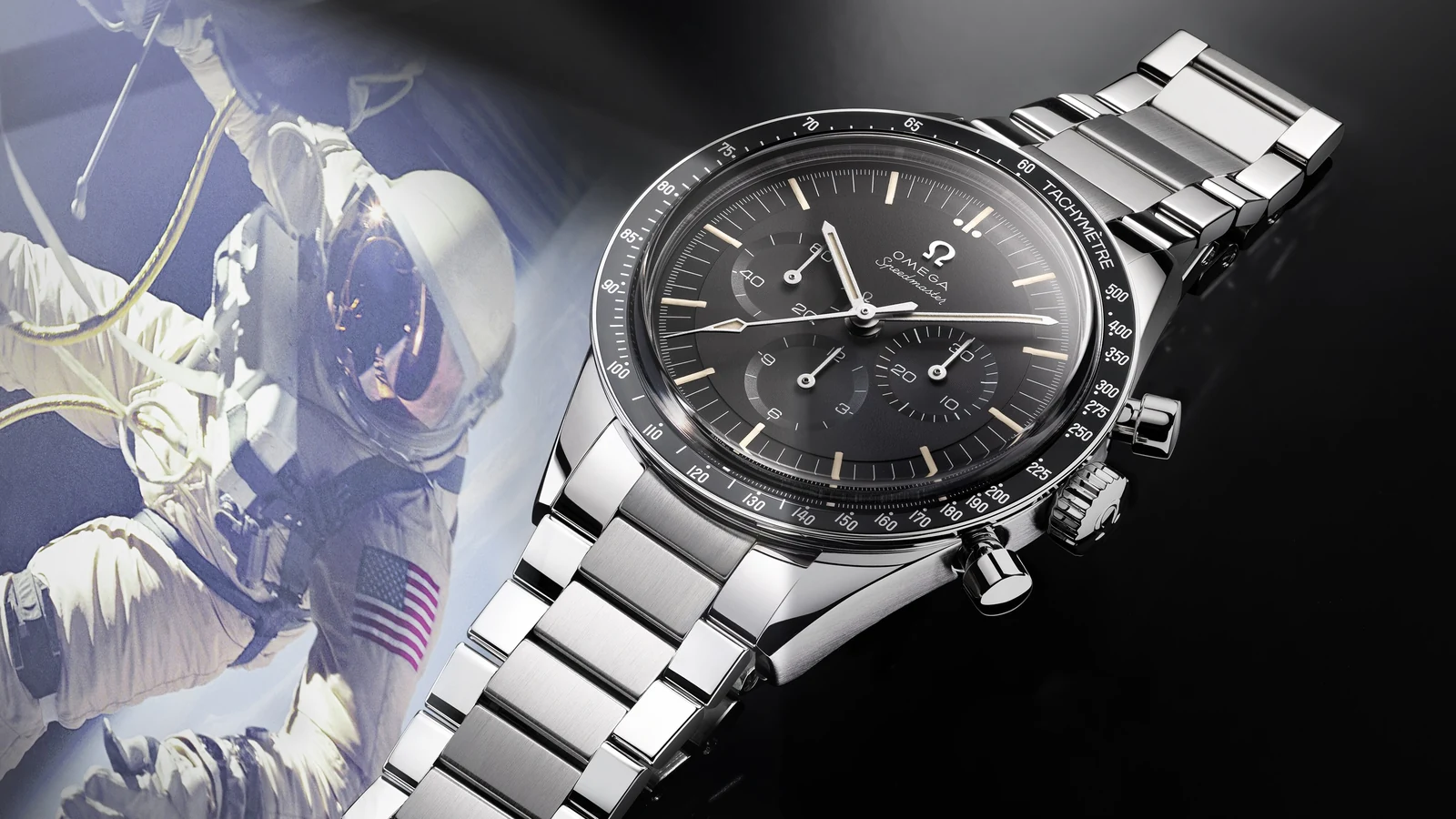
Omega · Speedmaster Calibre 321 «Ed White»
The model in detail
Why the 321
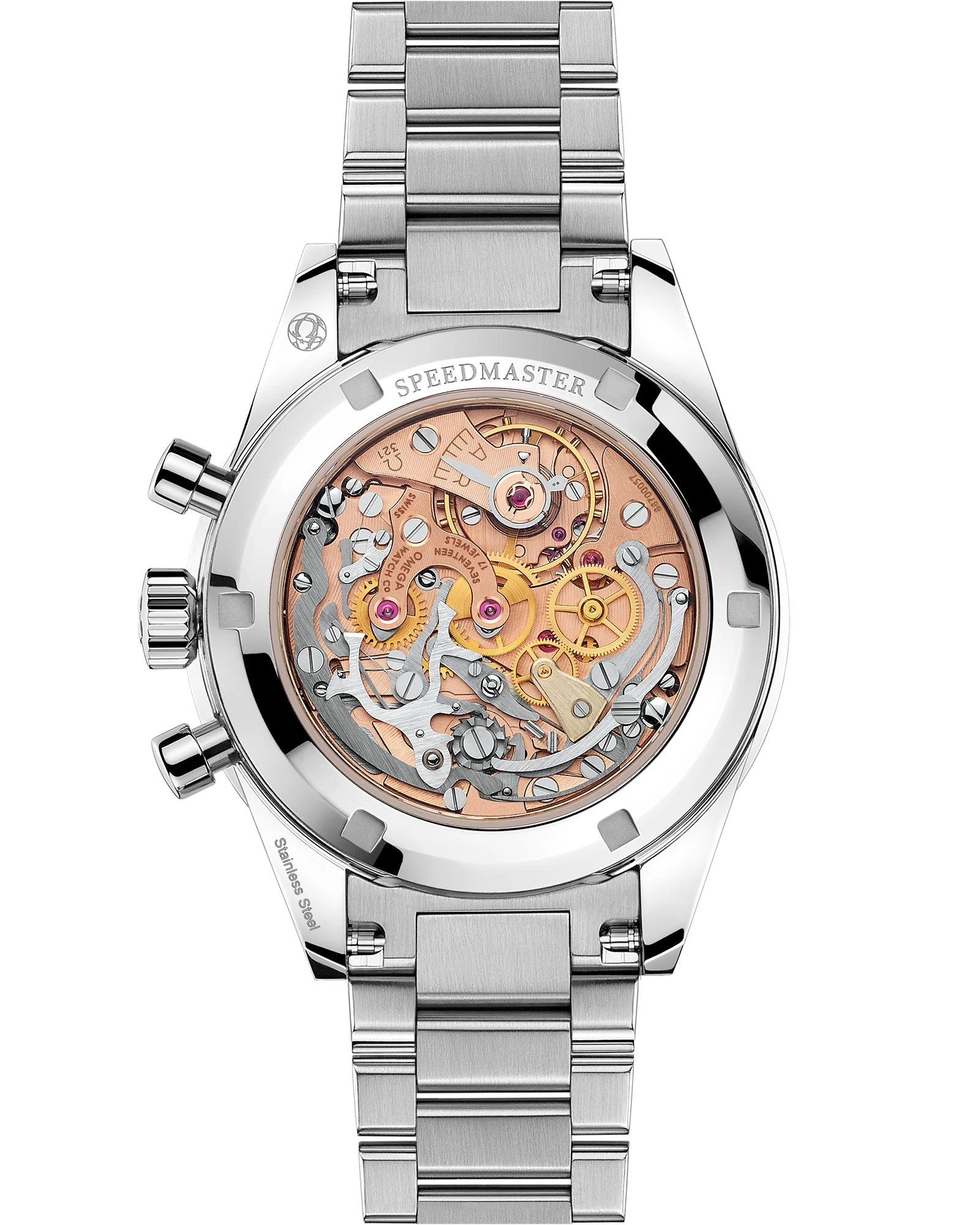
The Speedmaster Calibre 321 invites a look at both sides. On the front is a familiar black chronograph with three counters. On the back is an open arrangement of levers, wheels and bridges: manual winding leaves the movement free of an obscuring rotor. In steel reference 311.30.40.30.01.001, that mechanism sits inside a 39.7 mm case. The combination of a compact silhouette and a historic calibre makes the “Ed White” a distinct choice within the Speedmaster family. The photographs suggest why an owner might enjoy taking it off occasionally to examine it, as well as using it to tell the time.
Ed White and Gemini IV
The “Ed White” name refers to Edward White, who left the Gemini IV spacecraft on June 3, 1965, becoming the first American to walk in space. NASA gives the duration of that spacewalk as 23 minutes. Omega connects the modern model to the third-generation Speedmaster, reference ST 105.003, worn by White. Today’s watch conveys that early silhouette without literally reproducing its materials and construction. That distinction helps explain the model: its link to space history is specific, but this is a new watch with its own specifications.
 Enlarge
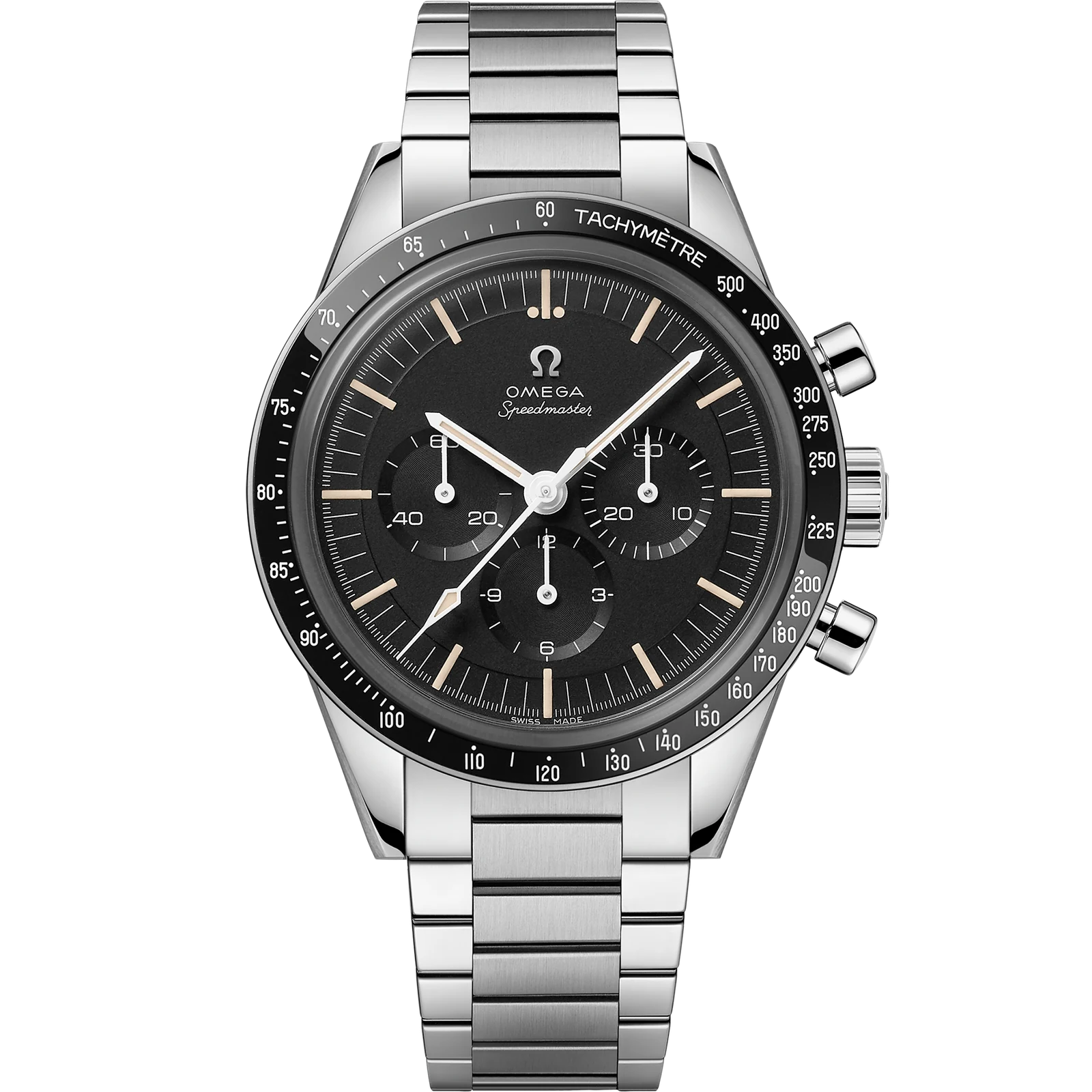
Full view of steel reference 311.30.40.30.01.001: straight lugs, black dial and bracelet.
© OMEGA SA · SourceRecreating the historic calibre
Bringing back the 321 took more than an old drawing. According to Omega’s history, the team spent over two years studying the second-generation movement and used tomography to examine the Speedmaster worn by Eugene Cernan during Apollo 17. The revived movement entered the modern collection, and this steel version followed in 2020. The approach is interesting in itself: Omega restored a recognisable architecture rather than simply placing a historic name on another modern calibre. For a collector, that continuity may matter more than a list of new technologies.
Case size and wrist fit
A diameter of 39.7 mm suggests a moderate size, but a fitting should begin with the full geometry: 48 mm from lug to lug and a thickness of 13.7 mm. This is not a flat watch. If you want a chronograph that slips under a narrow cuff, diameter alone will not tell you enough. The official photographs clearly show the straight lugs and the exposed crown and pushers on the right side. I would assess the fit in three steps: whether the lugs extend beyond the wrist, whether the pushers interfere when bending the hand, and whether the bracelet distributes the weight comfortably.
 Enlarge
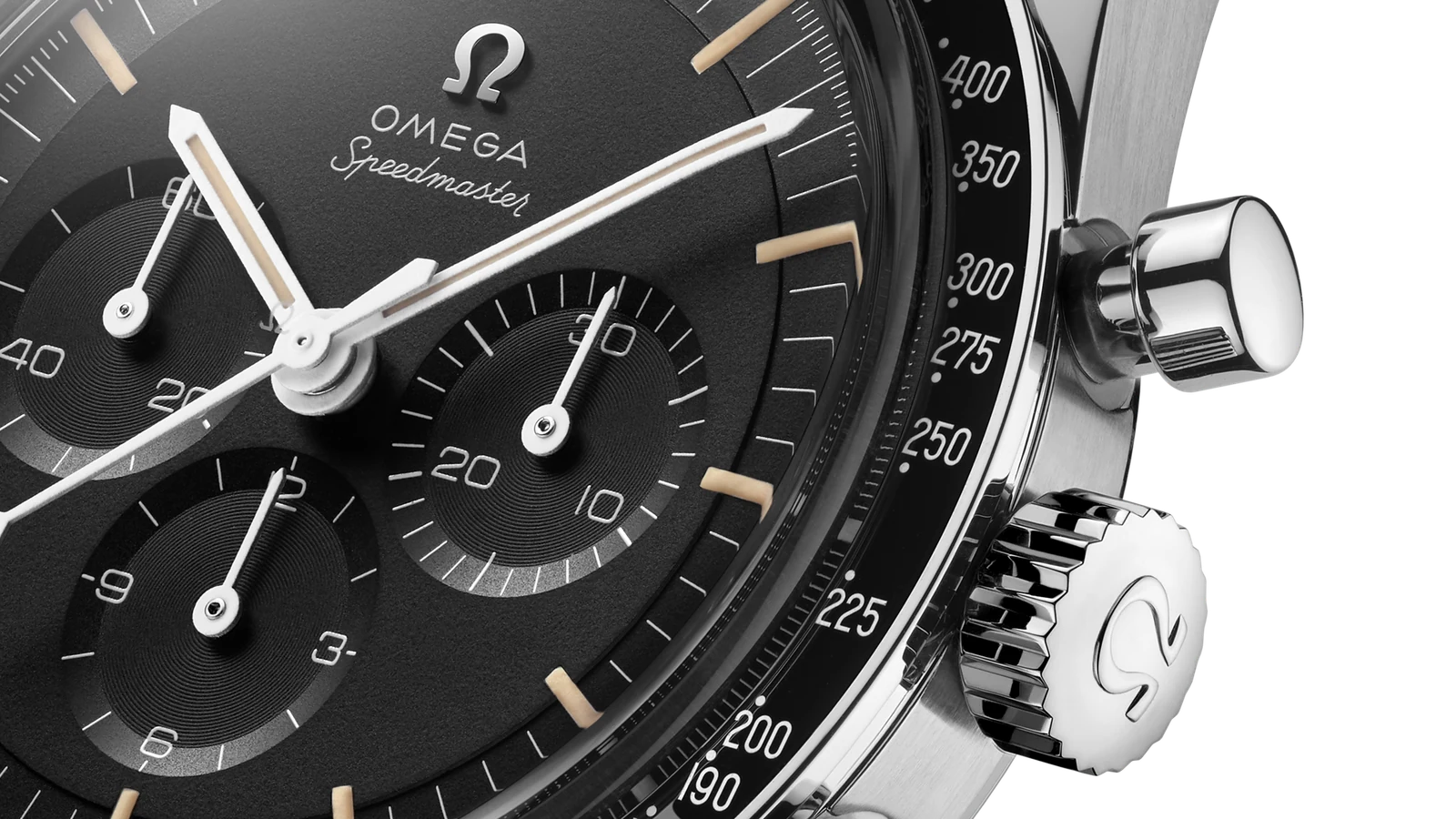
Close-up of the applied logo, stepped dial edge, bezel and chronograph pushers.
© OMEGA SA · SourceThe dial and Dot over 90
The dial relies on depth and contrast. A step around its edge gives the minute track a separate level, the applied vintage logo adds volume, and white hands stand out against black. Running small seconds sit at 9, the 30-minute counter at 3 and the 12-hour counter at 6. The long central seconds hand belongs to the chronograph; it should not be mistaken for an indication that the watch is running. The bezel preserves a collector’s detail, Dot over 90: the dot above the number 90. It changes nothing about everyday time reading, but shows the attention paid to the historic appearance.
Ceramic, sapphire and the tachymeter
The materials explain where the modern version departs from its predecessor. Its black bezel ring is polished ZrO₂ ceramic, the tachymeter scale is white enamel, and the front crystal is sapphire with an anti-reflective coating on the inside. A tachymeter relates the time taken to cover a known distance to average speed: if one kilometre takes 30 seconds, the scale indicates 120 km/h. In everyday life, the stopwatch is likely to be useful more often than that scale. Visually, the ceramic sheen and raised crystal work well with the dial’s simple, almost instrumental layout.
 Enlarge
View from the sapphire caseback side: hand-wound calibre 321 and steel bracelet.
© OMEGA SA · SourceThe column wheel explained
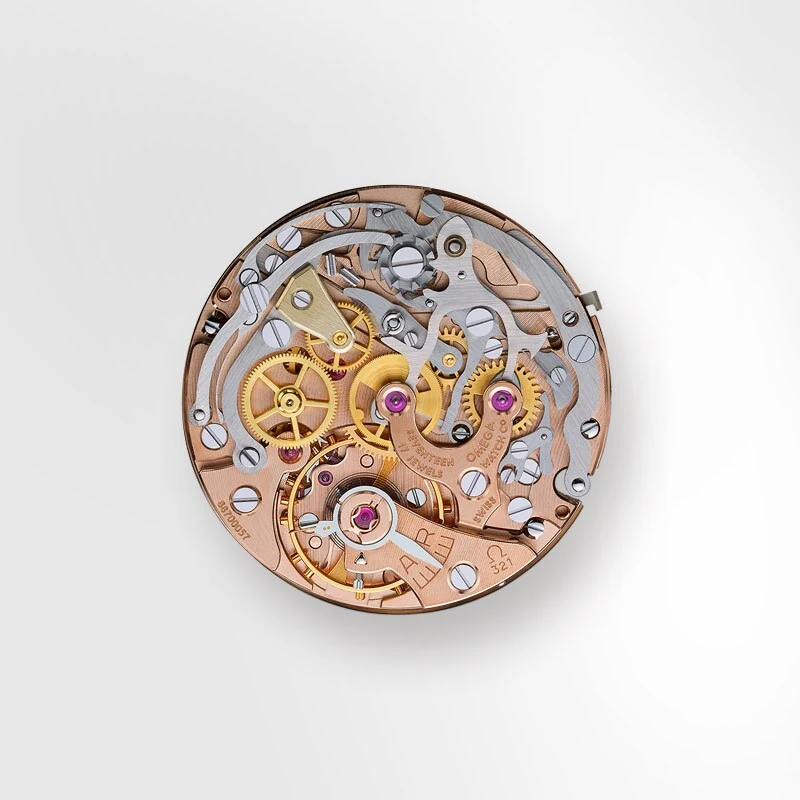
The 321’s central technical detail is its column-wheel chronograph control. The wheel’s successive positions coordinate the levers as the stopwatch changes state. It controls a function; it does not, by itself, determine timekeeping accuracy. Those ideas should be kept separate. Omega also specifies a Breguet balance spring and a frequency of 2.5 Hz: 18,000 vibrations per hour, or five steps per second. Here, watching how the mechanism is arranged is more interesting than competing over numbers. Pusher feel can only be assessed on an actual watch during an encounter with it; a photograph cannot establish it.
 Enlarge
The modern revived calibre 321 outside its case. The separate image reveals the arrangement of bridges and levers.
© OMEGA SA · SourceManual winding and a 55-hour reserve
Manual winding establishes a habit: the owner supplies energy to the spring, and wrist movement does not replenish it. The stated reserve is 55 hours after a full wind. That is more than two days but less than three: a fully wound watch set aside on Friday evening may have stopped by Monday. For daily wear, making winding part of a morning routine is straightforward, following Omega’s instructions and never forcing the crown beyond its stop. For someone who frequently changes watches and values immediate readiness, that habit may be inconvenient. For an enthusiast of hand-wound mechanics, it provides a brief daily connection with the movement.
A closer look through the caseback
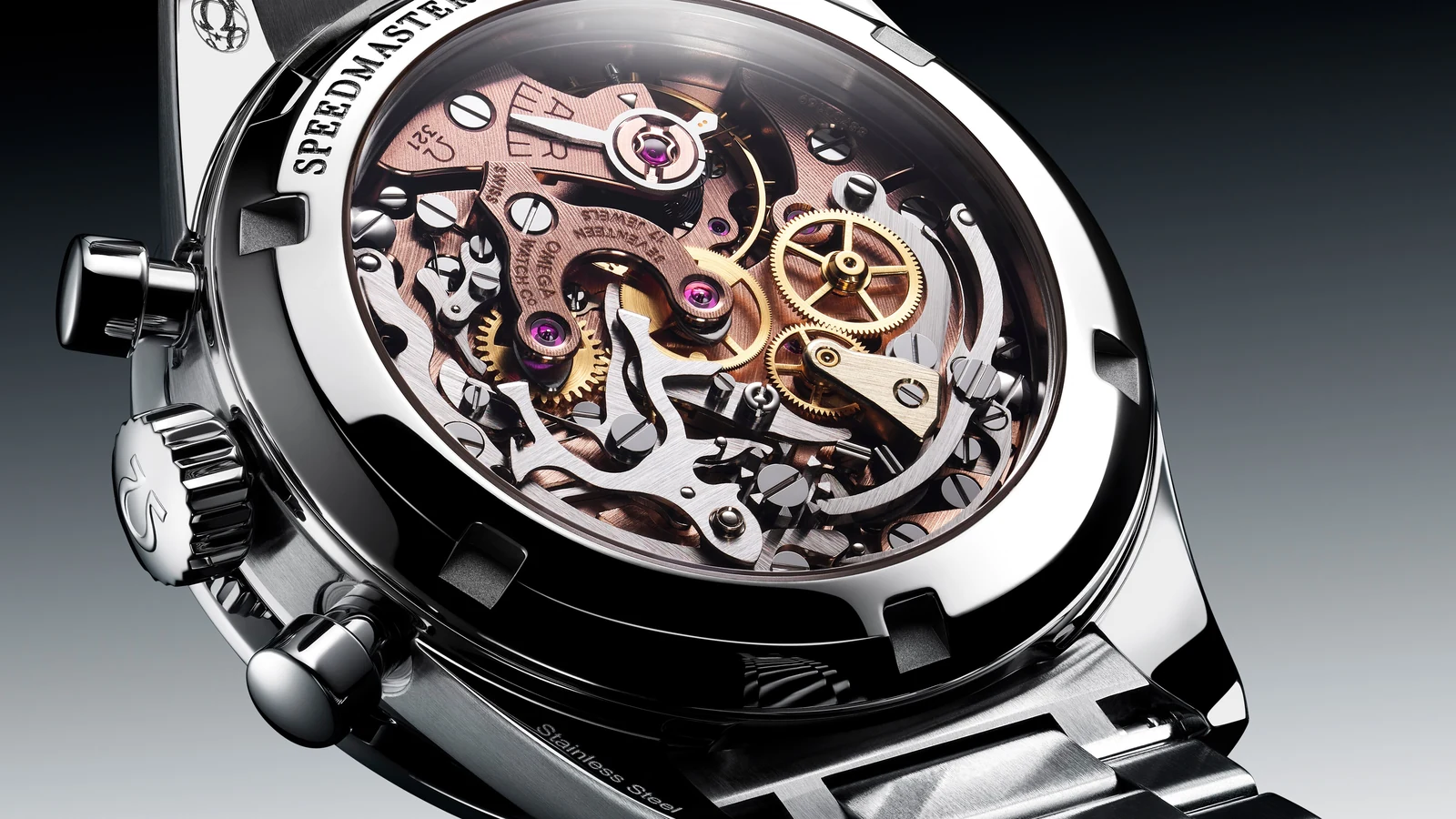
The transparent caseback makes the watch’s construction part of the review rather than a hidden specification. The close-up shows warm-coloured bridges, steel levers, screws and jewels. Omega describes the modern 321’s finish as a PVD coating with 18K Sedna gold; that describes a coating, not an entire movement made from solid gold. The photograph of the standalone calibre is particularly helpful: inside the case, the edge of the back obscures part of the construction, while outside it the arrangement is easier to follow. That openness is a strong argument for the 321 if you enjoy mechanics as something to observe.
 Enlarge
Movement close-up through the transparent back: warm-toned bridges and visible chronograph mechanics.
© OMEGA SA · SourceBracelet, clasp and alternative straps
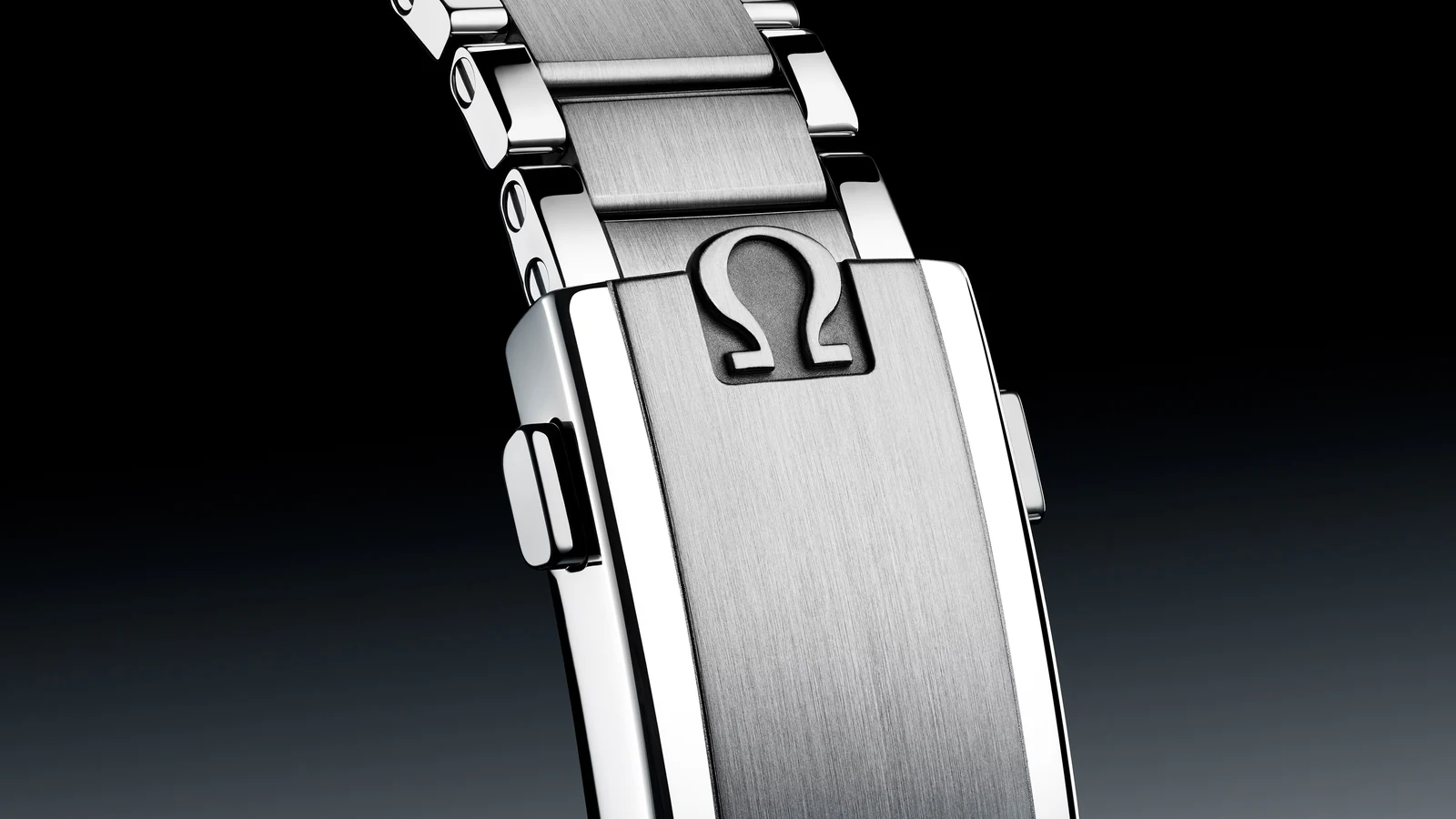
The steel bracelet continues the model’s restrained character: the photographs show flat links, brushed surfaces and a folding clasp with the Omega logo. The manufacturer lists an approximate weight of 128 g; the actual weight on the wrist will depend on the number of links remaining after sizing. Lug spacing is 19 mm, so an alternative strap needs that specific width. A photograph cannot tell you how the clasp will sit on a particular wrist. During a fitting, it is useful to assess the watch both with your arm hanging down and resting on a table: a comfortable diameter does not guarantee a comfortable bracelet.
 Enlarge
Brushed folding clasp with the Omega logo and flat bracelet links.
© OMEGA SA · Source321 or Moonwatch 3861
A natural comparison is the modern Moonwatch Professional with calibre 3861. For the specific sapphire-crystal steel reference 310.30.42.50.01.002, Omega specifies a 42 mm case and a Co-Axial Master Chronometer movement. The 321 has a different emphasis: an early silhouette, historic architecture and a column wheel. Both versions require manual winding, so moving to the regular Moonwatch does not add automatic convenience. If modern certification and calibre technology matter most, I would start with the 3861. If history and the visible construction through the back are more appealing, the 321 supplies a specific reason to choose it. One calibre’s specifications and guarantees cannot automatically be transferred to another.
Who this watch suits
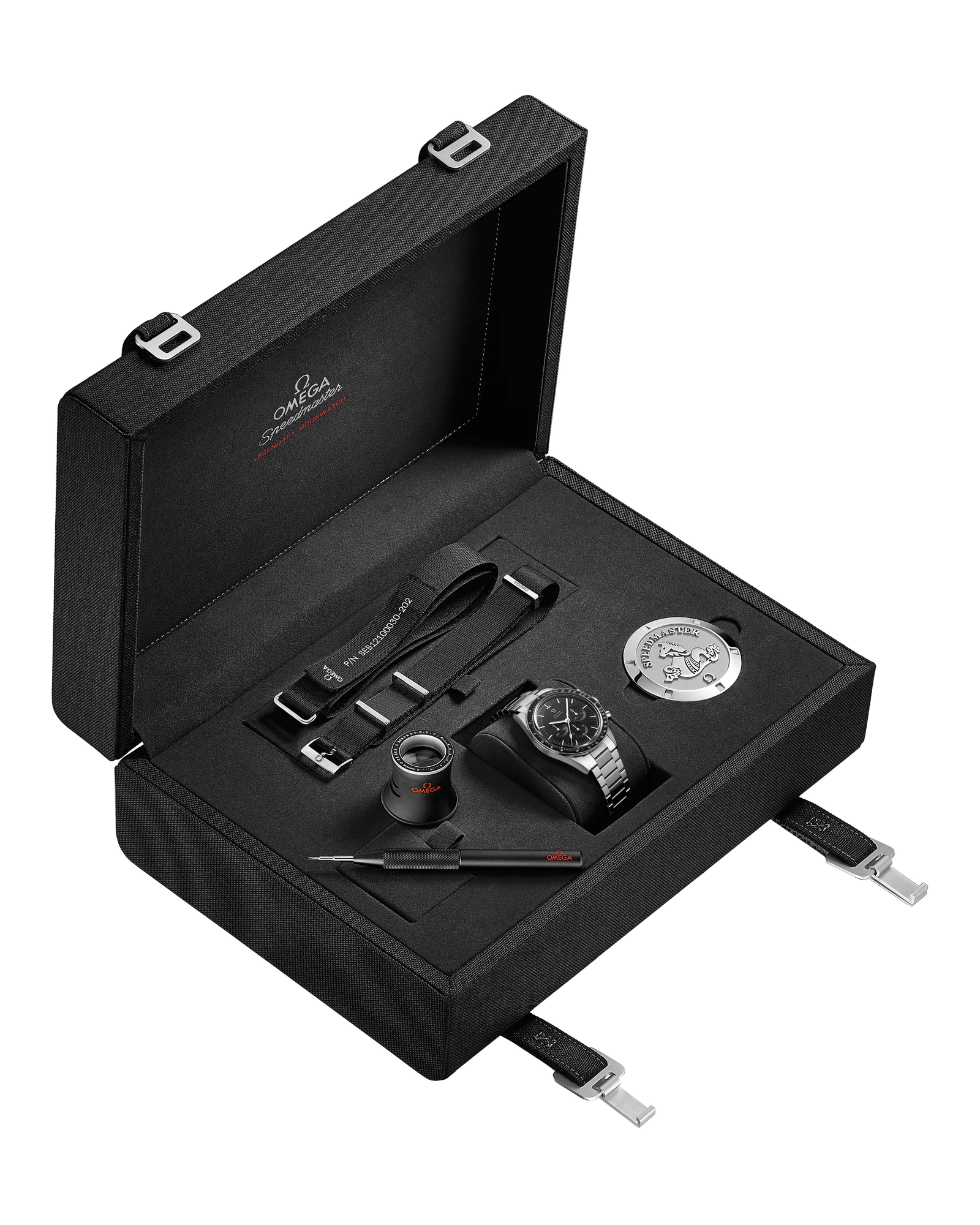
This model’s water resistance is marked by the manufacturer as 5 bar, or 50 m. That is a watch specification, not an invitation to operate the chronograph pushers underwater: water use should follow Omega’s instructions and account for the condition of the particular watch’s seals. Before buying, try the case on, check the set and documents, and ask about servicing terms. The presentation-box photograph below shows the manufacturer’s display; the contents of a particular delivery should be confirmed with the seller. My reason to choose the 321 would be a deliberate preference for history and visible mechanics. Buying it solely for the familiar black dial would miss the strongest reason this watch exists.
 Enlarge
Official Omega presentation-box photograph. Confirm the contents of the particular watch set with the seller.
© OMEGA SA · Source