Chopard · L.U.C 96.01-L / XPS 1860 Officer
The movement in detail
The movement’s idea
A small rotor marks a major turning point in the brand’s story. The L.U.C 96.01-L uses a 22-carat gold micro-rotor for automatic winding. This compact weight helps fit automatic winding into a thin construction. For the owner, it offers winding from wrist movement without necessarily moving to a bulky watch.
Chopard itself predates this calibre by a considerable margin. Louis-Ulysse Chopard established his watchmaking business in Sonvilier in 1860. Karl Scheufele acquired the company in 1963. That makes 1996 the beginning of Chopard Manufacture, rather than the brand’s founding date.
In the mid-1990s, Karl-Friedrich Scheufele organized the development of a proprietary calibre, linking the new manufacture with the founder’s name. Louis-Ulysse Chopard’s initials became L.U.C. The first movement in this programme, known today as 96.01-L, dates to 1996.
Practical meaning
Twin technology uses two coaxial barrels to deliver approximately 65 hours of power. A useful way to understand that figure is to count your time away from the watch. Friday evening to Monday morning is roughly 60 hours: a fully wound movement has a little reserve beyond that interval.
The current L.U.C XPS 1860 Officer specifications list a 3.30 mm movement thickness and a 4 Hz frequency. Here, compact construction accompanies COSC chronometer certification and the Poinçon de Genève. These address different assessments: accuracy testing and the Geneva hallmark’s requirements for watch execution.
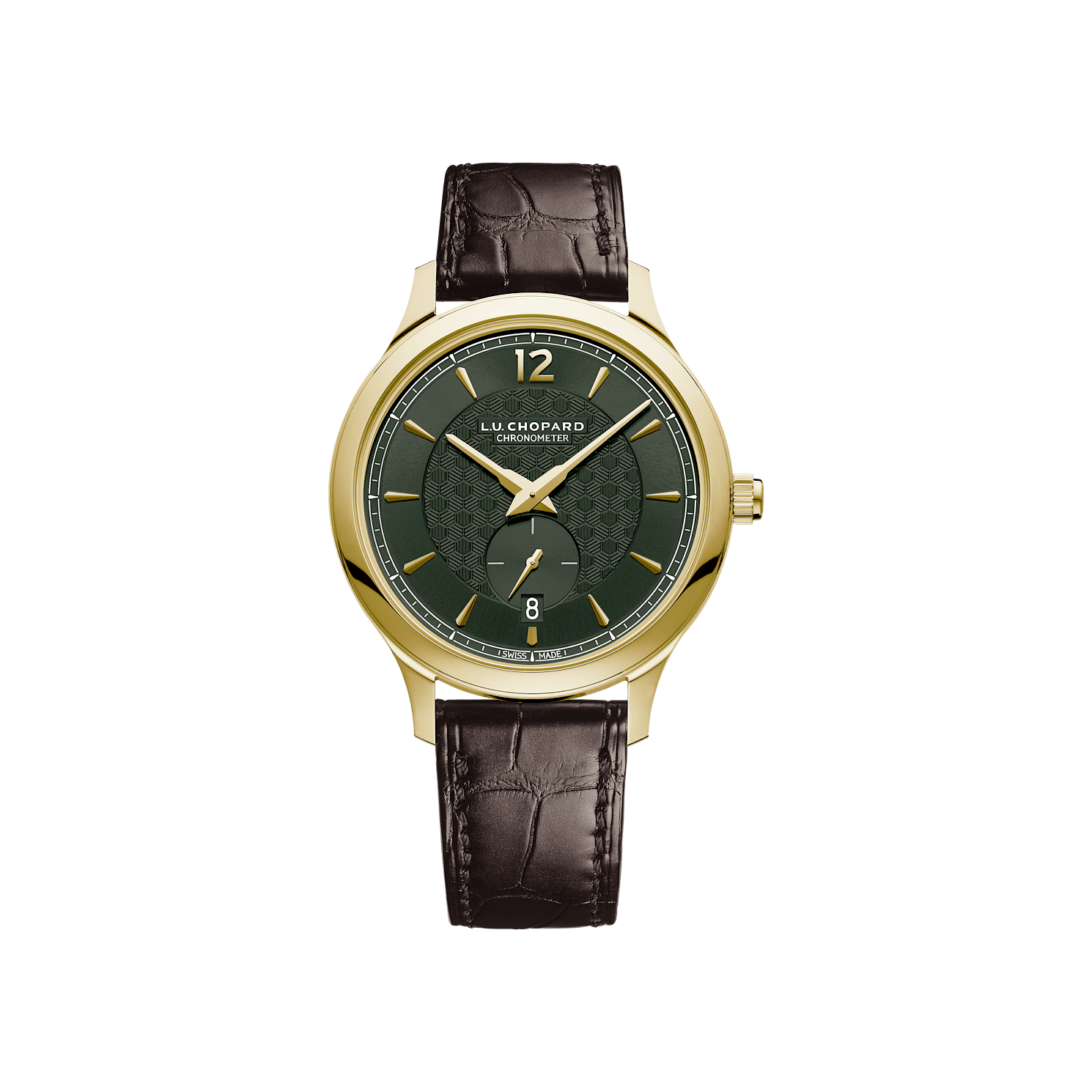
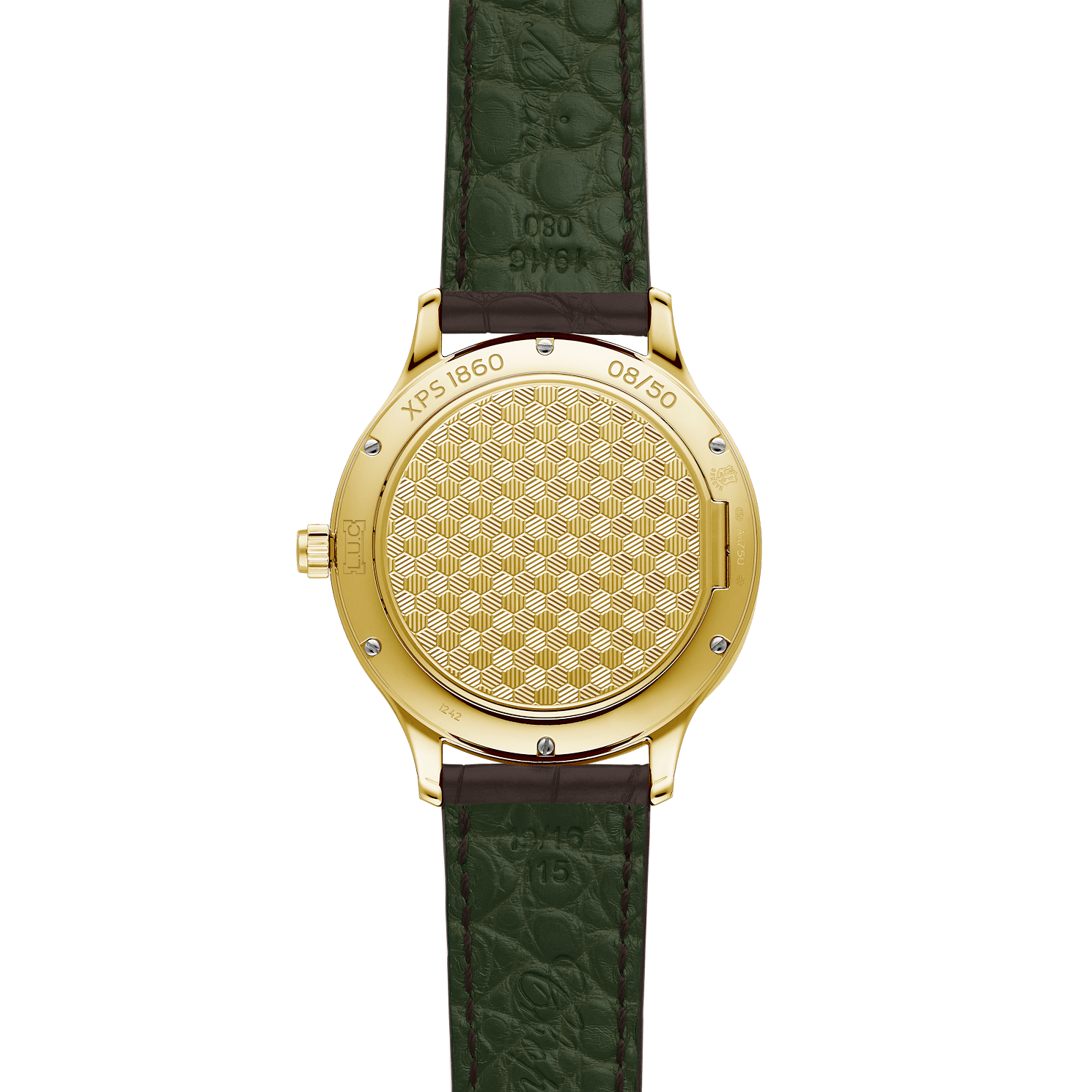
The illustrated Officer model shows this construction in a finished watch. A honeycomb-pattern gold cover opens to reveal the transparent back; it is closed in the photograph below. For us, the value of 96.01-L lies in the connection between construction, dimensions and manufacturing history that can be traced through a specific calibre.
 Enlarge
L.U.C XPS 1860 Officer, 161242-0001, with its engraved honeycomb gold cover closed.
© Chopard · Source