Lederer · CIC 39 Racing Green
The model in detail
Meet the watch
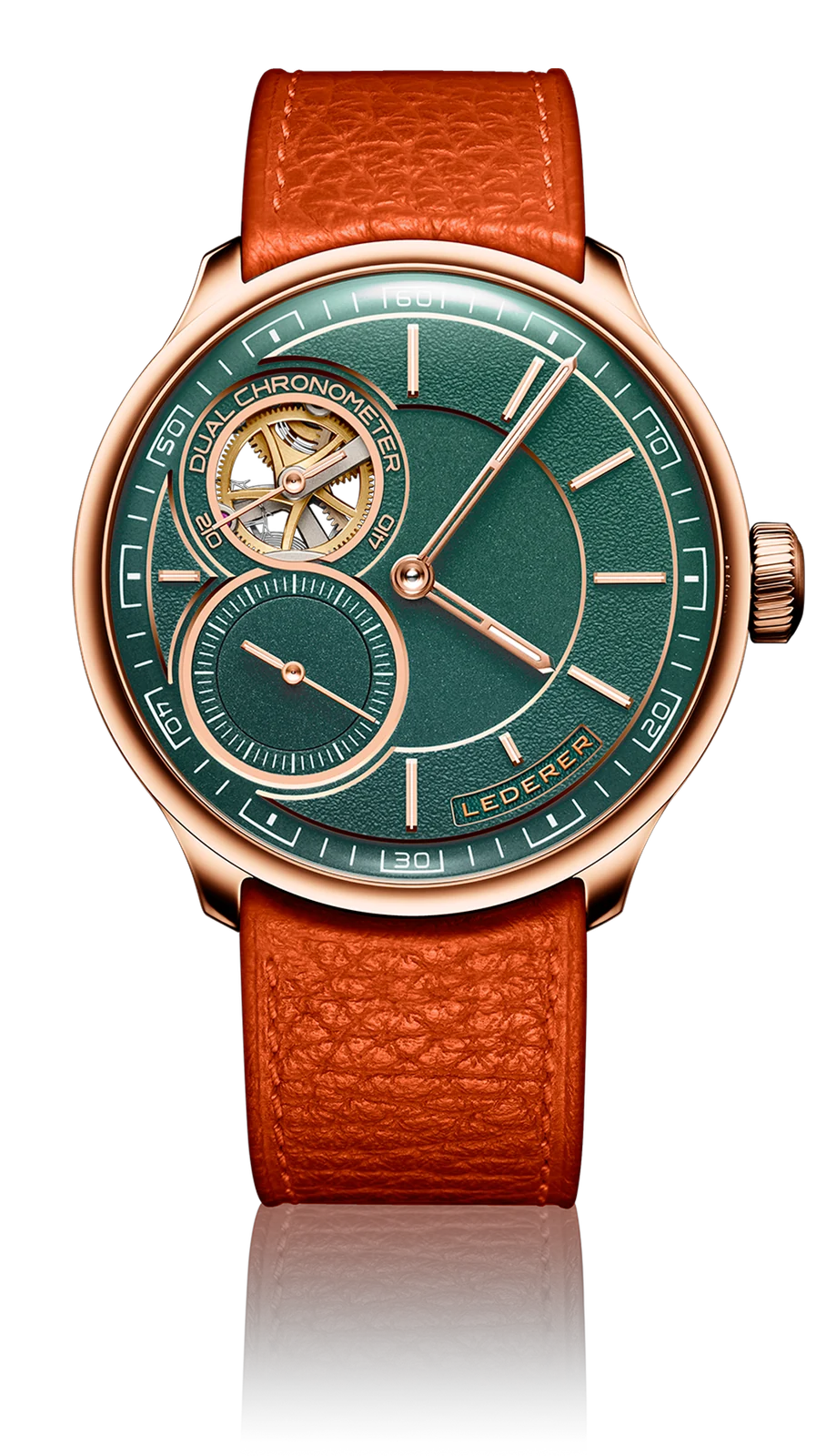
Two overlapping small-seconds scales capture attention on the green dial of the Lederer CIC 39. The upper one opens a view into the mechanism, while the lower one retains the quiet texture of the main surface. Behind that asymmetry lies an unusual construction: two independent gear trains deliver energy to a single regulating organ. That alone makes the CIC worth a dedicated review. It offers a way to discuss the foundation of mechanical timekeeping: how stored force becomes the sequence of impulses that sustains the balance’s oscillations.
Bernhard Lederer continues a line of research he traces to Abraham-Louis Breguet and George Daniels. In his construction, each of two barrels powers its own gear train, while two escape wheels alternately deliver impulses to the balance. The manufacturer calls the system the Dual Detent Escapement. The purpose of this elaborate architecture is to control energy transfer at the escapement itself, seeking lower losses and more stable operation. It helps to distinguish the number of energy paths from the number of regulators: both streams serve one balance.
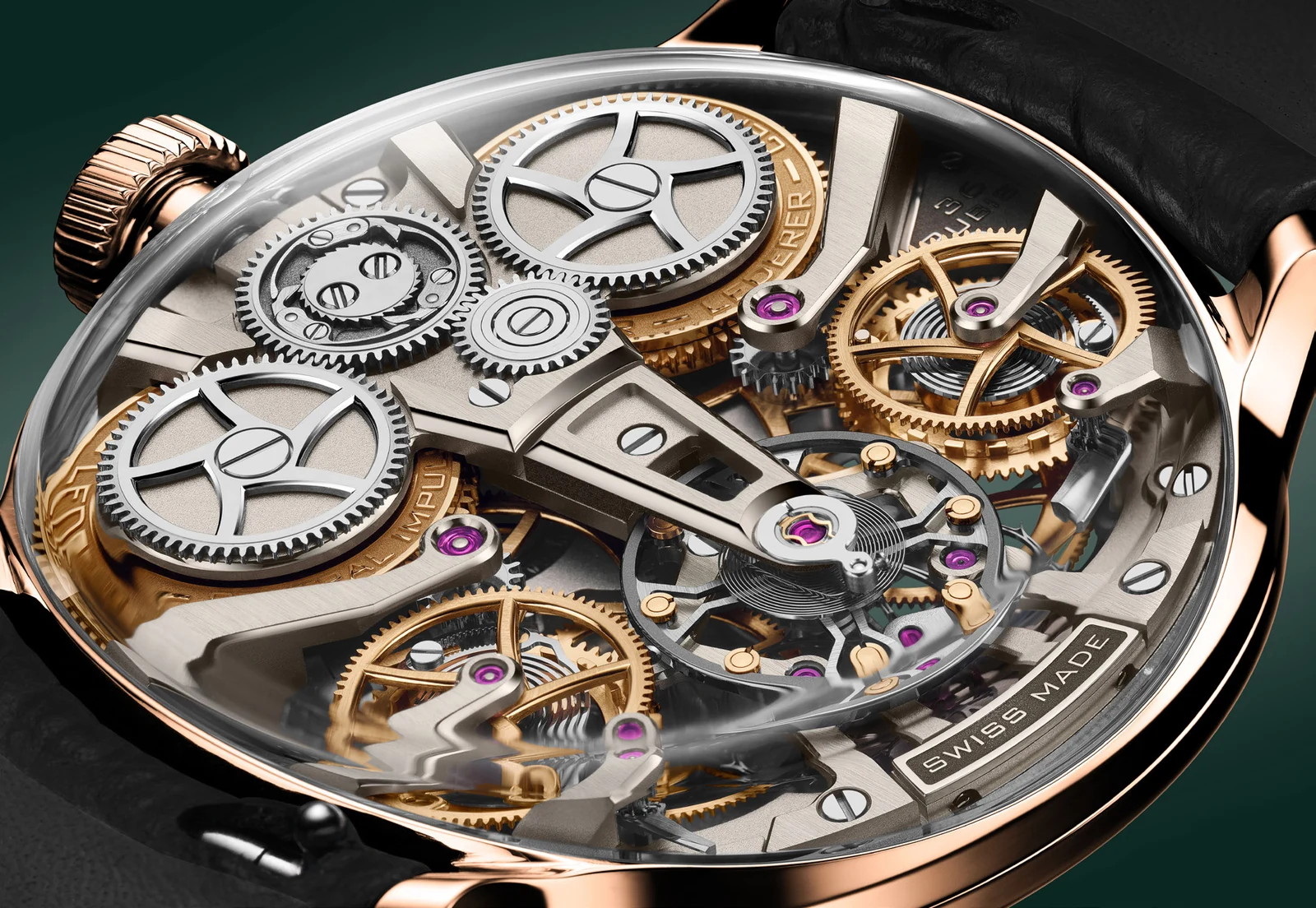
Each path has its own constant-force remontoir. It acts as an intermediate energy store, helping to isolate the escapement from the changing force of the mainspring. In an ordinary watch, an owner hardly notices how the spring’s state changes during the day; for the constructor, it is a central problem. In the CIC, two such devices are coordinated with two independent gear trains. The view through the back is therefore especially useful: the movement’s symmetry makes its central idea legible even without understanding every lever’s shape.
 Enlarge
The CIC’s two independent energy trains are visible through the sapphire caseback. Official photograph from the Racing Green press kit.
© © Lederer · SourceDetails and limitations
The manually wound movement comprises 212 components and 36 jewels, operates at 3 Hz and provides a 38-hour reserve. Those figures reveal the project’s priorities: attention centres on the escapement and stable energy delivery. Maximising total running time was not the primary goal. In everyday use, that means regular, preferably daily, winding. The official page states COSC certification; this is separate evidence of testing, while a certificate and the actual performance of an individual watch on the wrist remain distinct considerations.
The construction’s scale is particularly interesting. The movement measures 35 mm across and 4.95 mm thick; the case measures 39 × 10.75 mm. This keeps a complex arrangement within classical proportions. In the version considered here, the case is 5N rose gold, with sapphire crystals on both sides. The domed back gives a three-dimensional view of bridges and wheels. Photographs reveal the transitions between polished and matte finishes, as well as how closely the movement extends towards the edges of the case.
Racing Green adds its creator’s personal story to the technical theme. In the dedicated press kit, Lederer connects the shade to his vintage Sunbeam-Talbot car. The matte surface restrains reflections, while the warmth of the gold picks out the hands and applied elements. The aperture at ten o’clock reveals a constant-force device, giving the open section of the dial a specific purpose. A leather strap supports the model’s intimate character; the vivid green remains its strongest visual feature when the watch emerges from a cuff.
 Enlarge
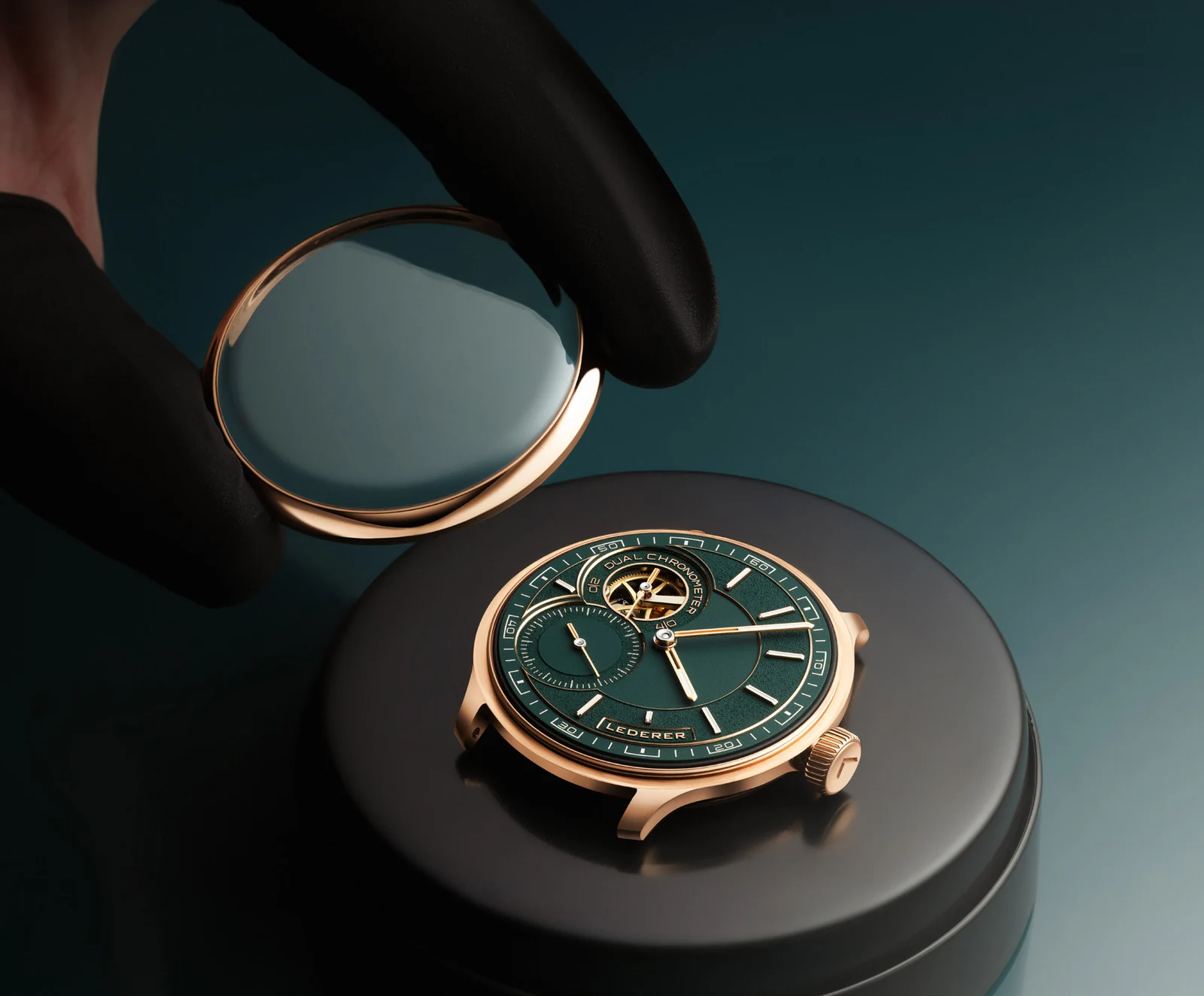
Assembling the CIC 39 Racing Green in 5N rose gold: two small-seconds scales and the constant-force aperture.
© © Lederer · SourceServicing also forms part of this construction’s distinctive character. Lederer states that maintenance and technical interventions are performed exclusively at its manufacture in Neuchâtel. An owner therefore needs to plan for shipping the watch and coordinating work with the maker. A rare movement carries the value of authorship, together with dependence on the expertise of a particular workshop. This deserves discussion before purchase, alongside availability: the official page invites enquiries about future allocations.
Water resistance is 30 metres, and a 38-hour reserve requires attention to winding. The CIC 39 therefore makes most sense for someone interested in the construction and finishing of watches, and willing to accommodate the ownership routine they entail. We single it out for the consistency of its engineering solution: two energy trains, two remontoirs and an original escapement serve a common objective. The green dial makes it recognisable, but the lasting impression comes from understanding what happens beneath it.